
A lot of engineering and operations managers may not realise it yet but physical AI is coming and it’s coming fast. With it will come a burning question for the industry. If the automation itself is getting smarter, easier and cheaper to deploy then does your UK manufacturing business still need a robotics system integrator to put the system in?
It’s a fair question. The honest answer is that it gets the relationship between technology and expertise exactly backwards. Easier access to powerful tools doesn’t remove the need for people who know how to use them well — it tends to raise the stakes for getting them right.
The manufacturers who’ll benefit most from Physical AI won’t be the ones who go it alone. They’ll be the ones who pair the new technology with the right integration partner.
What Physical AI Actually Does: Industrial Automation Trends UK Manufacturers Need to Understand
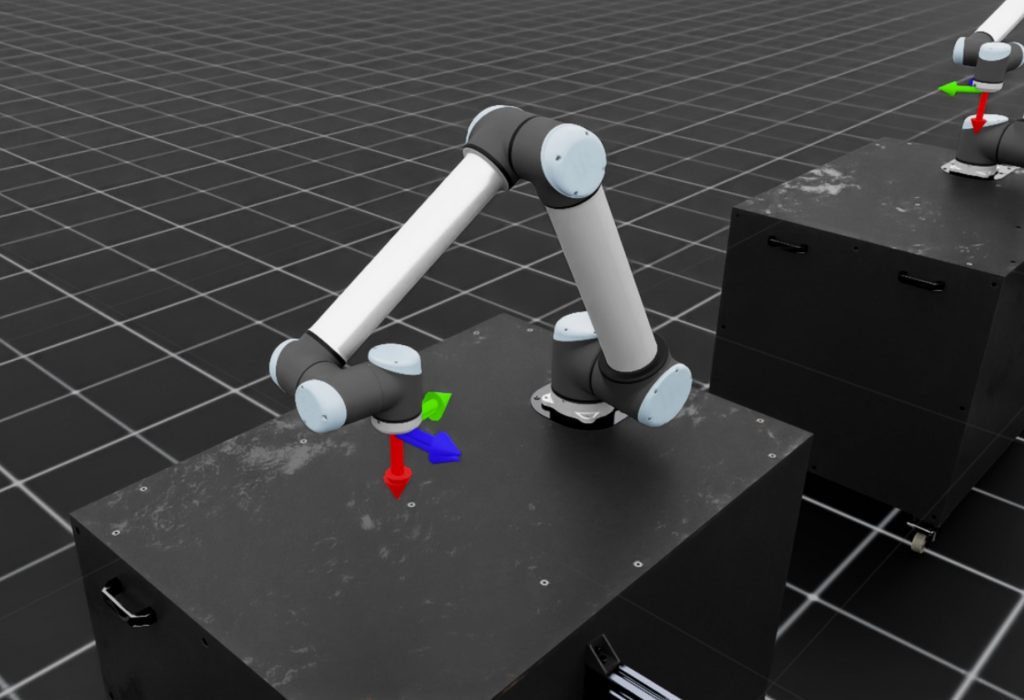
Physical AI describes systems where artificial intelligence is embedded in machines that interact with the real world. An example would be a robot that can adapt its grip based on what it’s picking up or a digital twin that simulates an entire production line before a single piece of steel is cut.
The practical gains are real and worth taking seriously. Automation projects that previously required months of custom programming can now be prototyped faster. NVIDIA’s Isaac Sim platform lets developers train robots in simulated environments before physical deployment, compressing early-stage iteration considerably. Companies like Boston Dynamics and Covariant are building systems that respond to natural language instructions rather than fixed routines.
All of this genuinely lowers the barrier to starting a robotic automation project, however, what it doesn’t do is make the underlying complexity of a project go away.
Physical AI relocates complexity rather than removing it. Traditional automation was hard to program and relatively transparent once running. Physical AI is faster to prototype but introduces new failure points: the accuracy of your simulation inputs, the quality of your sensor data, the integrity of your connectivity layer. The difficulty hasn’t left the building. It’s moved to places that are harder to spot before go-live which is precisely where an experienced integrator earns their money.
Why a Skilled Robotics System Integrator Still Matters
Physical AI lowers the floor. It does not lower the ceiling of what a well-integrated system needs to do.
A digital twin can show you what a robotic cell might look like in theory. It can’t tell you that your floor isn’t level, that your upstream conveyor creates a bottleneck at shift change, or that your existing PLC network won’t talk to the new system without a protocol conversion layer. Those are the things an experienced integrator spots before commissioning, not after.
System Design and Full-Line Integration
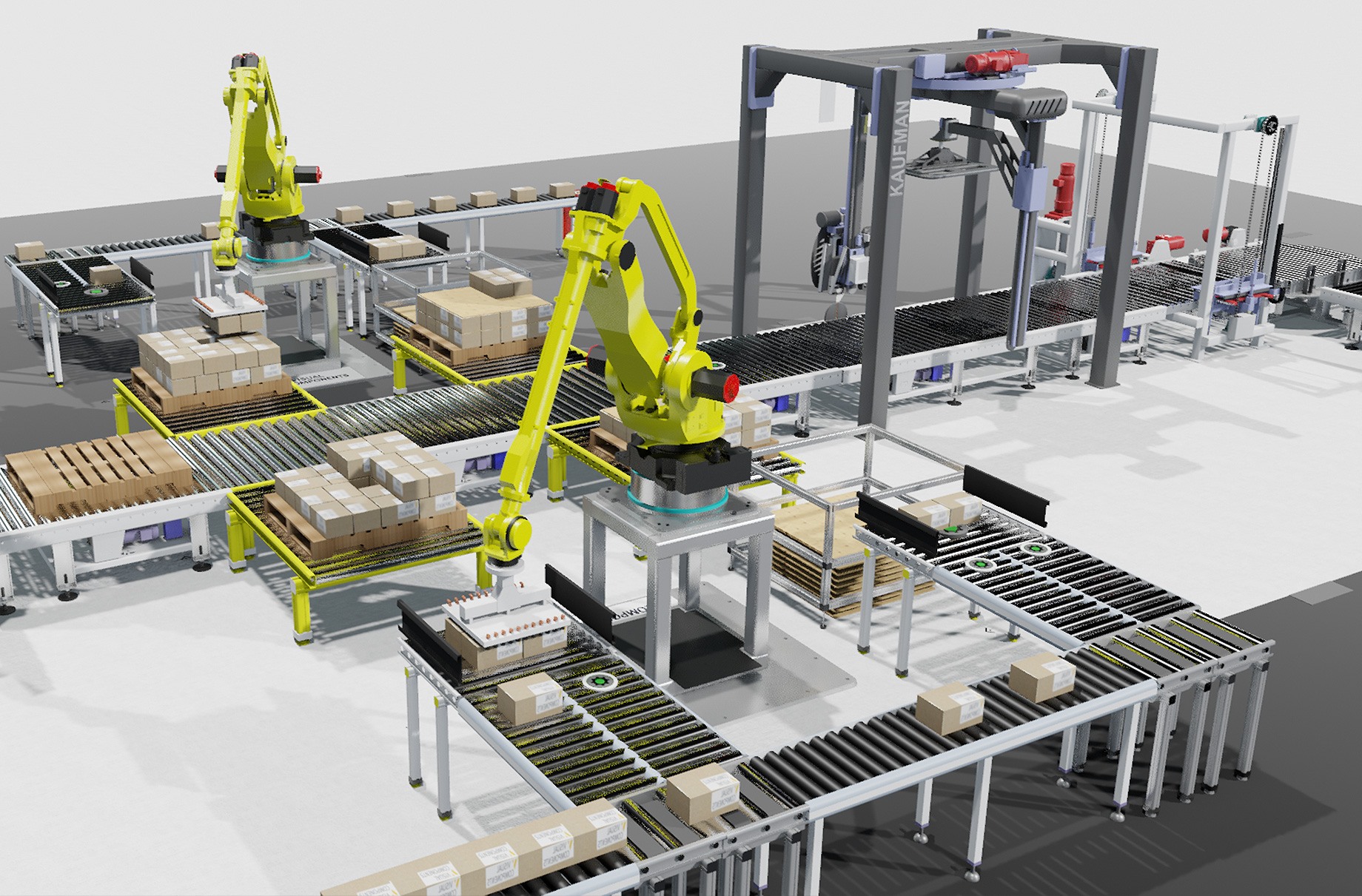
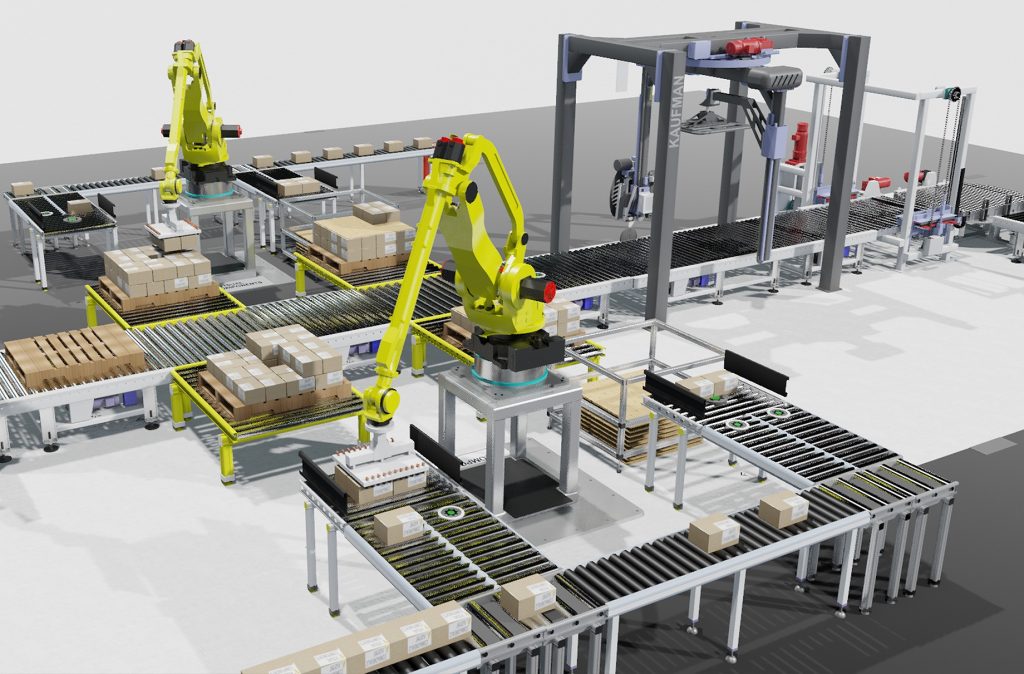
Most manufacturers don’t need a robot. They need a system that includes a robot. a system that includes conveyors, safety fencing, end-of-arm tooling, vision systems, and the upstream and downstream processes that feed and follow it. Designing that whole system, making sure it works as a unit, and commissioning it against a real production environment is the core of what a good robotic automation integrator does.
Physical AI tools can help model that system faster. But somebody still has to design it, specify it correctly, and take responsibility for whether it runs.
Simulation and Digital Twin Validation
Digital twins are increasingly useful for pre-project planning, and a skilled integrator will use them to the advantage of the project. The important word here though is use. A digital twin is only as accurate as the data and assumptions fed into it. An integrator who’s commissioned dozens of similar projects brings calibrated instincts to that modelling work. A first-time buyer doing it themselves is, essentially, guessing at their own factory.
Sensor Selection and Setup
Physical AI is heavily sensor-dependent. The wrong camera, the wrong lidar spec, the wrong sensor placement, and a system that performed perfectly in simulation starts throwing errors on day one. Sensor selection is a discipline in itself, and getting it right depends on knowing which sensor performs well in your specific operating conditions, taking into account variables like ambient light, temperature, vibration, product variation.
This is genuinely technical. It’s not covered in a vendor’s getting-started guide.
Connectivity: ERP, MES, and the Rest of the Factory
A robot that runs but doesn’t talk to your ERP or MES is an island. You can’t get production data out of it, you can’t push work orders into it, and you definitely can’t build a business case for the next cell. 56% of manufacturers are unsure whether their existing systems are ready for full AI integration, according to a recent industry survey and that figure applies squarely to the connectivity challenge Physical AI creates.
Bridging those systems requires someone who understands both the automation layer and the IT infrastructure. That’s a very specialist role.
Safety and Regulatory Compliance
UK manufacturing sites operate under strict machinery safety legislation. The relevant standards such as PUWER, the Machinery Directive, ISO 10218 don’t become optional because the robot is AI-guided. Risk assessments, CE/UKCA marking, functional safety analysis, and safety guarding requirements still apply, and they apply to the whole system, not just the robot itself.
A BARA-certified integrator should have this knowledge built in. A self-integrating manufacturer is responsible for understanding and applying it themselves.
Lifecycle Support
A system installed without integration expertise tends to become a problem after go-live. Not immediately, often 6 to 18 months in, when a component fails, a firmware update breaks something, or production requirements change. The question of who maintains it, updates it, and adapts it over time is one that’s easy to ignore during a project and painful to deal with later.
The integrators who thrive in a Physical AI world will be those who build ongoing service relationships, not just one-time installations.
Automation Project Risks: What Happens When Manufacturers Self-Integrate
Physical AI genuinely makes some early steps easier. You can spec a cobot faster. You can run a simulation in days rather than weeks. For straightforward, single-robot applications in stable environments, some manufacturers will manage fine without external help.
But the failure modes are predictable, and they’re consistent across the projects that don’t go well.
A digital twin that was built on inaccurate floor data or wrong cycle time assumptions will validate a system that doesn’t work in practice. The simulation looks fine. The real production line doesn’t. Discovering that after commissioning is expensive.
Poor sensor choices are a common second problem — especially with vision systems. A camera that works in the demo suite doesn’t necessarily work when your product has 14 variants, your lighting changes across shifts, and the parts occasionally arrive misoriented. Specifying around that requires experience, not optimism.
Safety gaps are the most serious risk. A manufacturer who self-integrates and misses a machinery safety requirement isn’t just facing a compliance problem. They’re facing potential liability. This is where cutting corners costs the most.
And across all of it, the ROI picture tends to look worse than it should. Projects run long. Rework costs money. The productivity gains arrive later, or at reduced scale. The integrator you didn’t hire ends up being hired anyway, but now they’re fixing a system rather than building one.
The Real Opportunity: More Manufacturers Coming to Automation
Here’s what Physical AI genuinely changes for the UK market, and it’s a big deal.
Around 20,000 of the UK’s 27,000 manufacturing SMEs currently operate without any robots at all, according to techUK research. The UK’s robot density sits at 111 robots per 10,000 manufacturing employees — below the world average, and well behind Germany, France, and the US.
The reason isn’t just cost. The Tony Blair Institute’s research on UK robotics found that most SMEs simply don’t feel confident identifying and engaging with automation products. They lack the internal expertise to even begin. Physical AI — with its lower upfront complexity and faster prototyping — starts to remove that confidence barrier.
If, even a small percentage of those 20,000 business decide to seriously start looking into automation over the next few years then the demand for skilled robotics integrators will increase, not decrease. Physical AI helps to create the first conversation. Experienced integrators take that conversation to a conclusion with a working project.
The manufacturers who move first, and move with the right partner, are the ones who’ll be running more competitive production lines in five years. The ones who wait — or who try to shortcut the expertise piece — tend to end up revisiting the same problems at higher cost.
Find a UK Robotics System Integrator
If you’re evaluating automation options, whether you’re at the earliest research stage or ready to scope a project, the starting point is finding an integrator who genuinely understands your sector and your application.
Browse our directory of UK robotics and automation integrators. Filter by sector, application, and region to find companies with relevant experience.
Not sure what your project might cost, or whether the numbers stack up? Use our handy automation ROI calculator to get a rough sense of payback period before you start talking to robotics integration companies UK-wide.
Not sure where to even get started? Answer some quick questions and we’ll match you with the right integrators for your project.
Frequently Asked Questions
Do you still need a system integrator if you’re using Physical AI?
Yes, and probably more than before. Physical AI compresses some early project stages and makes automation accessible to businesses that previously couldn’t justify the upfront investment. What it doesn’t do is replace the system design knowledge, safety expertise, and real-world commissioning experience that determines whether a project actually delivers. The tools have changed. The need for someone who knows how to use them properly hasn’t.
What does a robotics system integrator actually do?
They take a robot, or a wider set of automation equipment, and make it work in your specific production environment. That means system design, programming, sensor selection, safety compliance, connectivity to your existing IT systems, commissioning, and usually some form of ongoing support. The robot manufacturer builds the machine. The integrator makes it fit your factory.
If you’d like to know more, read our complete buyers guide to robotics integrators.
Can smaller manufacturers use robotics system integrators, or is it just for large sites?
It’s genuinely for all sizes now. Cobots, modular automation cells, and Robotics-as-a-Service models have brought the entry cost down considerably. The more relevant question is whether your application is a good fit for automation, which comes back to throughput, product consistency, and how predictable the task is. A good integrator will tell you honestly if the numbers don’t stack up rather than selling you a system you don’t need.
What are the main risks of self-integrating a robotics project?
The big three are: a digital twin or simulation built on wrong assumptions that doesn’t translate to real production; sensor or hardware choices that fail in actual operating conditions; and safety compliance gaps that create liability. The financial risk is that all of these tend to surface post-commissioning, when fixing them costs significantly more than getting them right the first time would have.
How do I find a robotics system integrator in the UK?
Start with a directory of integrators filtered by sector and application — our UK integrator directory is a good starting point. Check whether they’ve worked on similar applications in your sector, ask for case studies, and verify their certifications before shortlisting. If you’re not sure what you need, the integrator matcher tool can narrow the field based on your project specifics.