
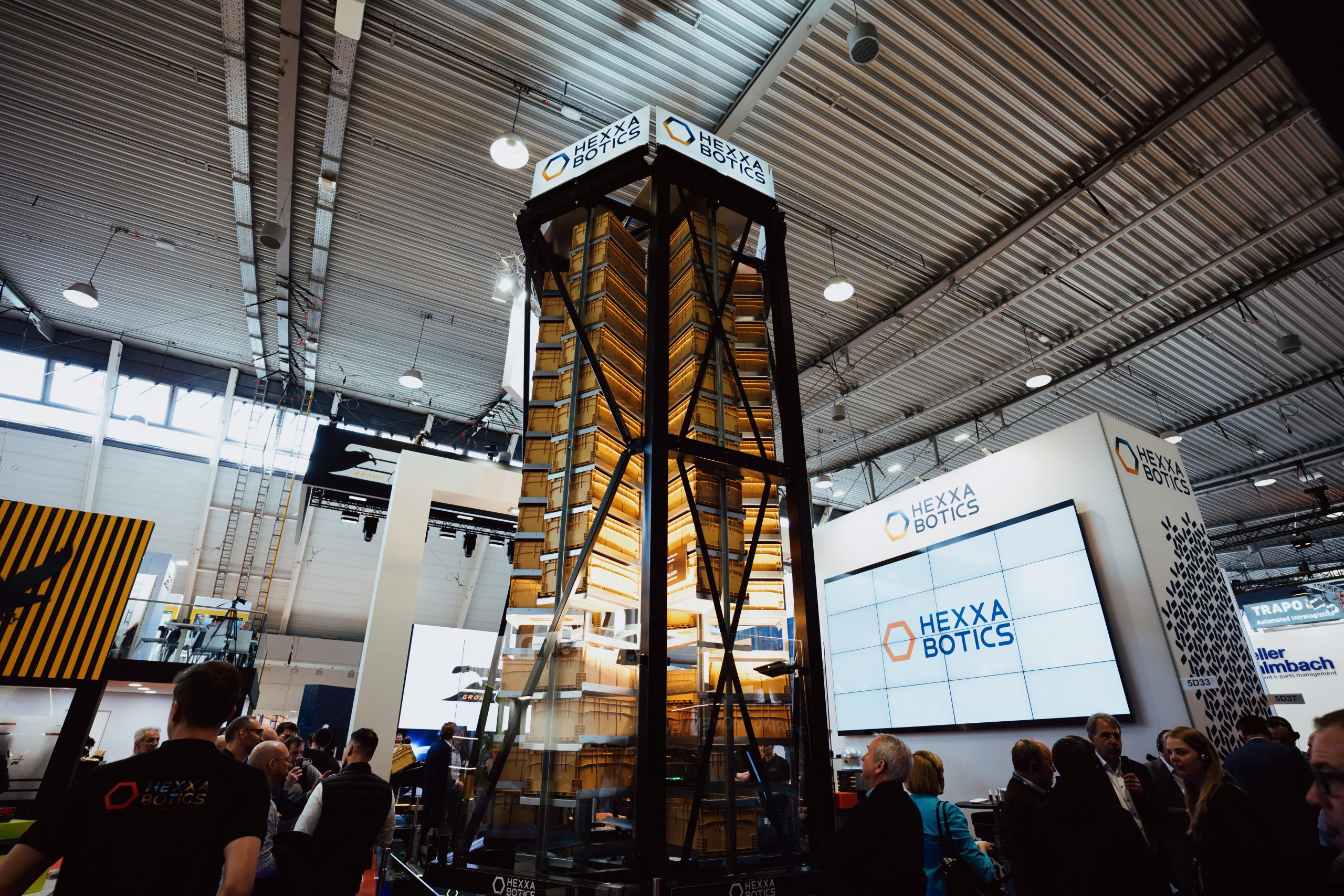
Insights from Hexxabotics on scalability, storage density, and the future of modular AS/RS systems.
Grid-based warehouse automation has been gaining serious traction, but most coverage treats it as a single category. It isn’t. The architecture varies enormously, and those differences matter a lot once you’re trying to scale.
We spoke with Hexxabotics, whose system takes an unusual approach: hexagonal storage towers, autonomous robots, and a design philosophy borrowed loosely from honeycomb structures. Their argument is that the problem with most existing automation isn’t the robots, it’s what the robots are working around.
Here’s what they told us.
Why warehouse operators are rethinking automation architecture
The standard pressures are real and they’re compounding. Space is expensive, labour is short, throughput expectations keep climbing, and most warehouse buildings weren’t designed with any of this in mind.

What’s changing is how operators are responding. For a long time, the answer was to buy more automation and bolt it onto existing infrastructure. That’s starting to look like the wrong instinct.
The issue, as Hexxabotics frames it, is that most traditional AS/RS systems fuse two things that probably shouldn’t be fused: storage capacity and throughput performance. If you want more of one, you’re rebuilding for both. Hexxabotics’ system tries to pull those apart, so you can add storage locations without touching the performance side of the architecture, or add robots without reconfiguring the storage layout.
Whether that holds up at scale is the more interesting question. But the underlying frustration it’s responding to, that warehouse automation tends to calcify rather than adapt, is one most operators will recognise.
What makes grid-based systems different?
The honest answer is: it depends which grid system you’re talking about. A lot of products in this category still carry the bottlenecks of older architectures, just in a different shape.
Hexxabotics makes a specific claim worth examining. Their system offers direct access to every storage location, which sounds obvious until you consider how many automated systems require reshuffling inventory to reach what’s at the bottom or back of a stack. Every reshuffle is wasted motion, and wasted motion caps your throughput ceiling whilst also consuming energy without adding value. Remove it, and you need fewer robots to hit the same output.
The hexagonal tower design also strips out aisles entirely, which is where a lot of cubic space disappears in conventional warehouse layouts. Combined with using the full building height, the density numbers improve meaningfully. The honeycomb geometry also reduces the amount of structural steel required, which shows up in the capital cost.
One other differentiator they flag is relocatability. Traditional AS/RS infrastructure is effectively permanent once it’s installed. Hexxabotics describes their system as significantly lighter and easier to move, which matters more than it sounds if a business is leasing space or expects its footprint to shift.
Which operations are best suited to grid-based systems?
High SKU count is the clearest indicator. When you’re moving thousands of different products, direct access to each one stops being a nice feature and becomes a throughput requirement.
The sectors where Hexxabotics sees the strongest fit are e-commerce fulfilment, fashion, FMCG, pharmaceuticals, spare parts distribution, and retail logistics. The common thread is variability: variable SKU mix, variable order profiles, variable demand across the year.
Seasonal peaks are a specific use case worth flagging. If your peak-to-average ratio is high, fixed automation infrastructure is a bad fit because you’re building for peak and paying for it year-round. A system where you can plug in additional robots for Q4 and pull them back in January is a different commercial model.
Pharmaceutical and regulated goods operations are another genuine fit, not just for the throughput reasons but because direct inventory access supports batch control, serialisation, and FEFO processes in ways that systems requiring reshuffling can’t easily manage.
What should companies consider before investing?
Start with the operational profile, not the building. The question isn’t “how much space do we have?” It’s “what does our order profile actually look like, and how is it likely to change?”
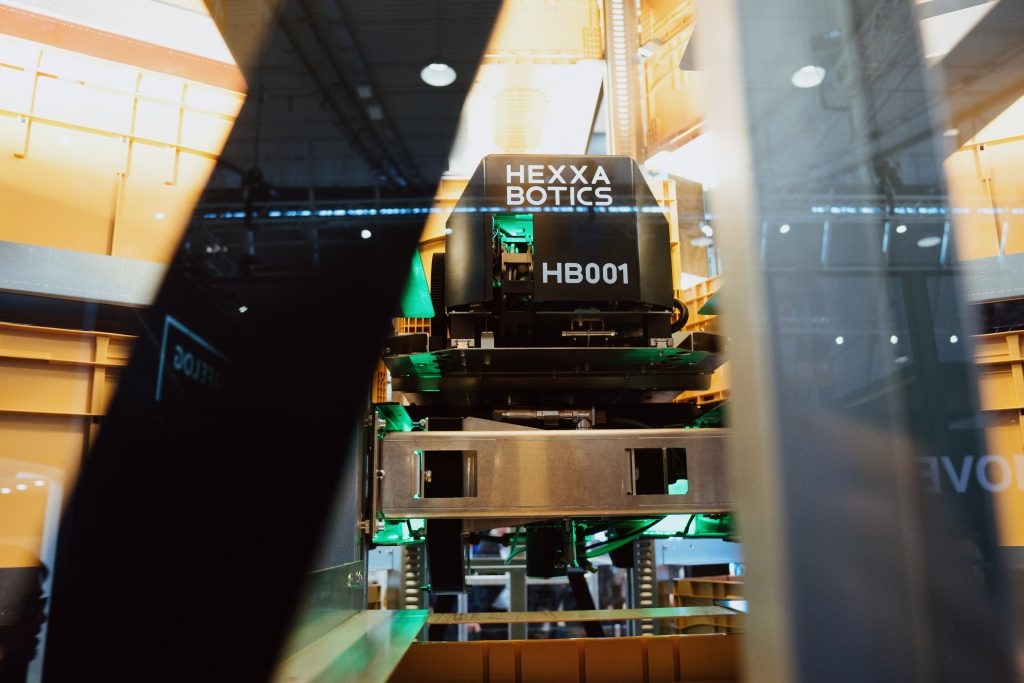
Hexxabotics flags a few evaluation criteria worth taking seriously. SKU complexity matters. So does the peak-to-average demand ratio, which is one of the most underweighted factors in automation decisions. Labour availability affects the urgency of the investment and the payback calculation. And future growth expectations need to be honest: fulfilment requirements in e-commerce and retail distribution can shift faster than most automation contracts allow for.
The scalability question deserves particular scrutiny. A system that performs well at day one but becomes expensive or disruptive to expand is a more common problem than vendors tend to advertise. Ask specifically: what does it cost and how long does it take to add 20% more storage capacity? What about 20% more throughput? If those are the same answer, the architecture probably hasn’t separated the two as cleanly as the pitch suggests.
Energy efficiency, installation complexity, and total cost of ownership over the system’s lifetime are also worth building into the evaluation. Headline throughput figures are easy to compare. Operational costs over ten years are harder, but they’re where the real numbers live.
Why interest is growing in markets like the UK
UK warehouse operators are sitting at a particular intersection of pressures. Space costs are high, particularly in urban and peri-urban locations. Labour availability has tightened. And the fulfilment expectations set by the largest e-commerce players have pulled smaller operators into a performance bracket they weren’t originally designed for.
That combination makes the density and scalability arguments more compelling than they’d be in a market with cheaper land and easier labour supply. Getting more out of the cubic metres you already have is a harder commercial proposition to ignore when those cubic metres cost what they currently cost in the South East.
There’s also a shift in how operators want to invest. The appetite for large, fixed, upfront automation commitments has cooled. Phased deployment, where you install a core system and expand it as the business grows, is increasingly what operators are asking for. That preference suits modular architectures more than it suits traditional AS/RS.
The future of grid-based warehouse automation
The direction of travel is reasonably clear. Warehouses are going to become more software-orchestrated, more modular, and more expected to adapt over time rather than be rebuilt.
What’s less certain is how quickly the industry gets there. Fixed, centralised AS/RS infrastructure has a long installed base and a long sales cycle. The arguments for distributed, modular systems are good, but the switching costs are real.
Hexxabotics’ view is that the next wave of development will focus on scaling storage and throughput more independently, improving energy efficiency, and pushing more intelligence into the coordination between robots, software, and physical infrastructure. That’s a reasonable prediction.
The more significant shift, and probably the slower one, is the change in how operators conceptualise warehouses at all. Not as fixed facilities built around one operational model, but as infrastructure that’s expected to evolve. That’s a different planning assumption, and it has implications for everything from lease structures to procurement cycles to how automation vendors write their contracts.
Grid-based systems are well positioned for that world. Whether the market gets there fast enough to matter is the variable.