
Vacuum Gripper
A vacuum gripper is an end effector that lifts and holds a part using suction cups connected to a vacuum source, rather than mechanically clamping it with fingers. It is the standard choice for flat, non-porous or delicate items such as boxes, bags, sheet materials and smooth-surfaced products, where mechanical gripping would be slower, riskier to the part, or simply unsuitable.
What makes a vacuum gripper important?
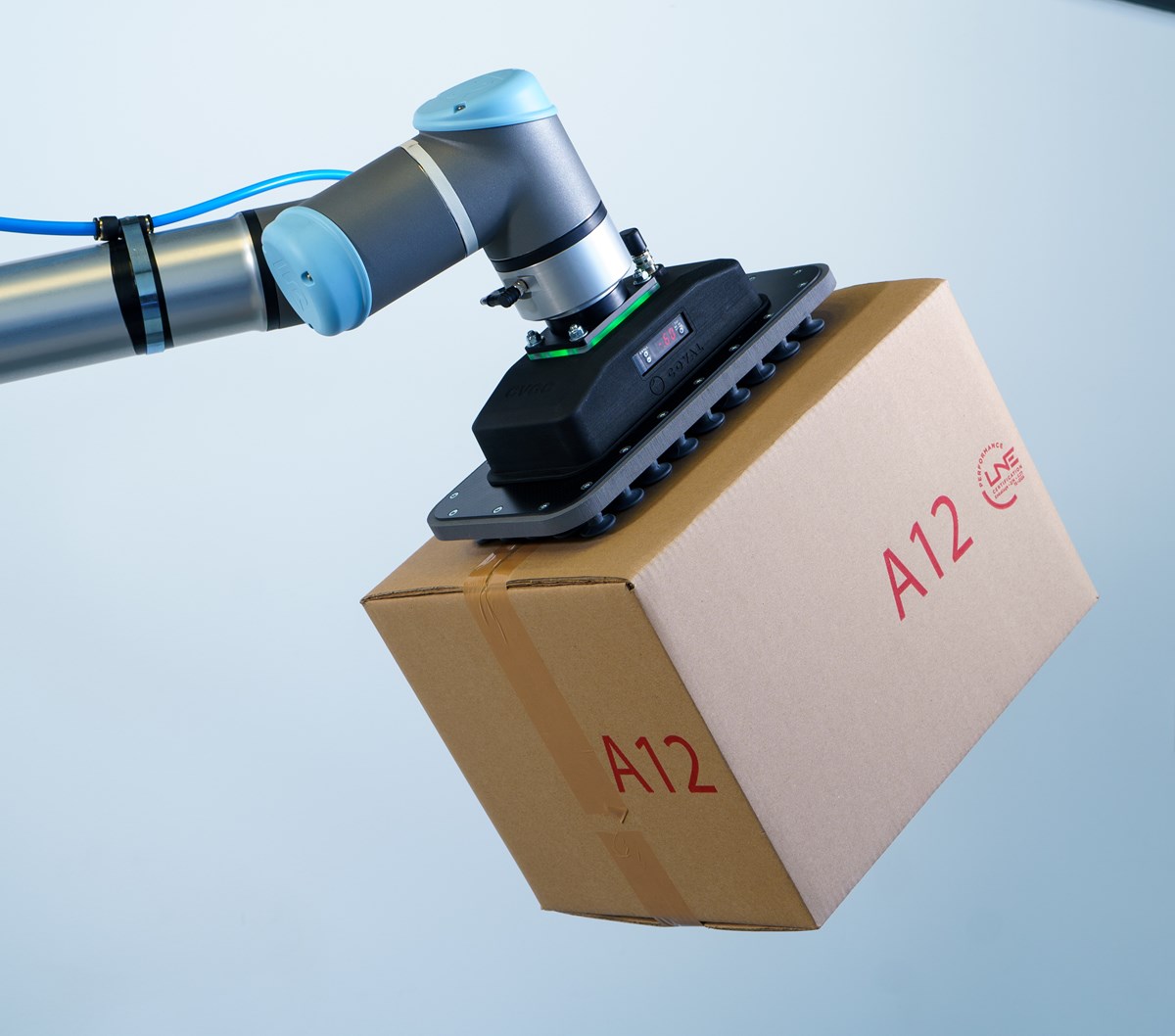
Vacuum gripping is usually the fastest and gentlest way to pick up flat or lightweight items, which is why it dominates palletising, packaging and box-handling automation. For manufacturers evaluating a project involving cartons, bags or flat sheet products, vacuum is very often the default answer, and the real engineering questions are about cup layout, vacuum flow, and how the system copes with porous or textured packaging that can leak air and lose suction.
Getting the vacuum system’s flow and pump sizing right matters more than it might appear, an undersized system will drop parts intermittently under load, which is a difficult fault to diagnose after installation because it often only appears with certain box types or on humid days when packaging performs differently.
How does a vacuum gripper work?
A vacuum gripper uses one or more rubber or foam suction cups, arranged in a pattern matched to the part’s shape and weight, connected via tubing to a vacuum generator. When the cups contact the part’s surface, the vacuum source removes air from between the cup and the surface, creating a pressure differential that holds the part against the cup.
A vacuum sensor typically confirms a good seal before the robot lifts, preventing the robot from moving a part that is not properly held, and can trigger an alarm or safe stop if suction is lost mid-cycle. Cup material and layout are chosen for the part: soft, deep-folded cups suit textured or slightly uneven surfaces like corrugated cardboard, while flatter, harder cups suit smooth, rigid materials like plastic sheet or glass. Porous materials, such as unlined cardboard or fabric, can require higher-flow vacuum generators to compensate for the constant air leakage through the material itself.
Where are vacuum grippers used?
- Case and carton picking in palletising
- Bag and pouch handling in packaging
- Sheet material handling (plastic, glass, cardboard)
- Layer picking for mixed-pallet building
UK Integrators Offering This Solution

Fox Precision Tooling
Precision Solutions for Automated Success

Piab
Vacuum automation, EOAT and gripping solutions for robots, cobots and automated production.

SCHUNK
Gripping, clamping, toolholding and automation technology for industrial robots and manufacturing.
Related Application Guides
Cobot Palletising: End-of-Line Automation with Collaborative Robots
Cobot palletising is an increasingly popular way for UK manufacturers to automate the repetitive task of stacking boxes,…
View Guide
Robot Palletising UK: Automating End-of-Line Stacking
Most production lines in the UK still end the same way they did 30 years ago with a person or persons lifting boxes onto…
View Guide