
Machine Vision
Machine vision is a technology that uses cameras and image-processing software to let industrial equipment ‘see’ and interpret what it is looking at. A machine vision system captures an image of a part, product or scene, then processes it to identify features such as position, orientation, colour or defects. That information is passed to a robot controller or PLC, which uses it to guide, sort or inspect.
Why Vision Systems Matter
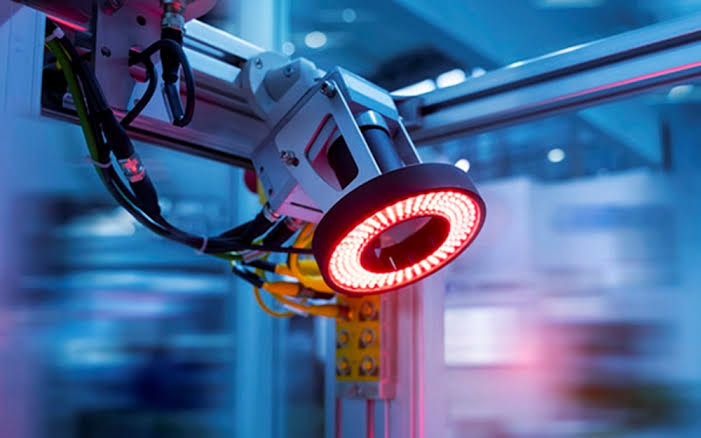
Machine vision is one of the enabling technologies that turns a simple pick-and-place robot into a flexible one. Without vision, a robot can only pick parts that arrive in an exact, pre-programmed position, usually via a jig, tray or fixture. Add a vision system, and the same robot can pick parts that are randomly oriented on a conveyor or tipped loosely into a bin, because the camera locates each part in real time and tells the robot where to reach. For UK manufacturers weighing up automation, this often determines whether a low-cost fixed-position cell is enough, or whether a more expensive vision-guided system is required. Getting this decision right early avoids expensive rework later, and it is usually one of the first questions a good integrator will ask during project scoping.
How Machine Vision Works
A typical machine vision system pairs one or more industrial cameras with dedicated lighting, positioned to capture a consistent, glare-free image of the part or scene. The image is passed to vision software, which processes it using techniques such as edge detection, pattern matching, blob analysis or, increasingly, deep learning models trained on sample images.
The software extracts the information the application needs, for example the X/Y/Z position and rotation of a part, whether a label is present and correctly printed, or whether a weld bead meets a quality threshold. This result is then communicated to the robot controller or PLC over a standard industrial protocol, such as Ethernet/IP or Profinet, in time for the robot to act on it within its cycle. Lighting and camera placement are usually the deciding factors in how reliable a vision system is, inconsistent ambient light, reflective surfaces or vibration are the most common causes of systems that perform well in testing but struggle on the factory floor.
Where Could You Use Machine Vision Systems?
- Robot-guided bin picking
- Vision-guided pick and place
- Automated defect inspection
- Label and print verification
- Weld seam tracking
UK Integrators Offering This Solution

Bytronic Vision Automation
The trusted vision intelligence and automation partner for global businesses

Engage Technology Ltd
Machine vision and imaging systems for industrial applications

Related Application Guides
![Machine Tending Robots UK: Costs, Systems & Integrators [2026]](https://automationworld.co/wp-content/uploads/cobot-machine-tending-300x184.jpg)
Machine Tending Robots UK: Costs, Systems & Integrators [2026]
A CNC machine's output depends on more than its programmed machining time. Every part also needs to be unloaded, replace…
View Guide
Robot Palletising UK: Automating End-of-Line Stacking
Most production lines in the UK still end the same way they did 30 years ago with a person or persons lifting boxes onto…
View Guide
Robotic Pick and Place UK: Automation Guide
Robotic pick and place automates the repetitive movement of products, components or parts from one location to another.…
View Guide