
Vision Inspection
Vision inspection is the use of machine vision systems to automatically check products or components against a quality standard, rather than relying on a person to look at each one. A camera captures an image of the part, and software compares it against pre-set tolerances or a reference image to decide whether it passes, fails, or needs a closer look. It is one of the most common entry points for manufacturers exploring automation, since it can run alongside an existing line.
Why is Vision Inspection important?
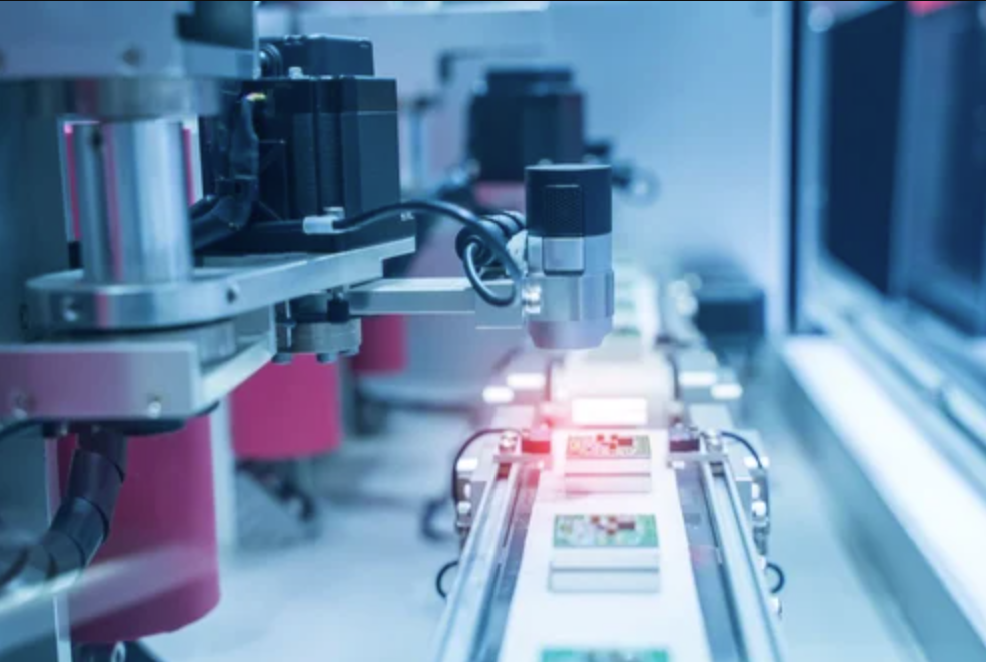
Manual visual inspection is repetitive, tiring and inconsistent, a person checking hundreds of parts an hour will inevitably miss defects, especially small or subtle ones, as fatigue sets in through a shift. Vision inspection removes that variability: once configured, it applies the same criteria to every part, every time, at line speed. For UK manufacturers this typically shows up as fewer customer returns and warranty claims, faster detection of a process going out of tolerance, and the ability to redeploy inspection staff to higher-value tasks. It is also one of the easier automation projects to cost-justify, because the savings from caught defects and reduced rework are usually easy to quantify against the price of the system, which makes it a common first automation project for companies that have not automated before.
How does Vision Inspection work?
A vision inspection system sits at a fixed point on the line, often just after a forming, filling or assembly step, where a camera captures an image of each part as it passes. The software compares that image against a reference: a golden sample, a CAD-derived template, or, for more variable defects, a machine learning model trained on examples of good and bad parts. Checks typically include dimensional measurement, presence or absence of components, correct assembly, surface defects such as scratches or contamination, and label or print verification.
When a part fails, the system typically triggers a reject mechanism, an air jet, a diverter, or a stop signal to the line, and logs the failure for traceability. Throughput requirements usually dictate the hardware: high-speed lines need faster cameras and simpler, well-lit checks, while lower-speed or higher-value parts can support more complex, multi-angle inspection. Integration with the plant’s existing PLC or line controller is usually the main engineering task, more so than the vision algorithm itself.
Where Would You See Vision Inspection Used?
- • Automated defect detection on production lines
- • Dimensional and completeness checks
- • Label and barcode verification
- • Pre-shipment quality checks
- • Robot-guided sorting of good vs reject parts
UK Integrators Offering This Solution

Bytronic Vision Automation
The trusted vision intelligence and automation partner for global businesses

Engage Technology Ltd
Machine vision and imaging systems for industrial applications

Related Application Guides
![Machine Tending Robots UK: Costs, Systems & Integrators [2026]](https://automationworld.co/wp-content/uploads/cobot-machine-tending-300x184.jpg)
Machine Tending Robots UK: Costs, Systems & Integrators [2026]
A CNC machine's output depends on more than its programmed machining time. Every part also needs to be unloaded, replace…
View Guide
Robotic Pick and Place UK: Automation Guide
Robotic pick and place automates the repetitive movement of products, components or parts from one location to another.…
View Guide