Application guide Warehouse robotics · 2026
Warehouse Robotics UK A buyer's guide to automation systems
UK warehouse operators continue to face recruitment and retention challenges. Robots don't fix the people problem entirely, but they can take away a lot of the strain by automating repetitive movement, storage and picking tasks.
What is Warehouse Robotics Automation?
Warehouse robotics covers the automated systems that move goods, manage storage, pick orders and handle inventory within a warehouse or distribution centre. As you can probably tell, this category spans an enormous range, from a small fleet of mobile robots navigating a single fulfilment floor, to a fully automated distribution centre processing very high order volumes each day.
This page introduces the main technology types and helps you understand where each one fits. Because the differences between them matter a lot.
Warehouse robotics isn't just a single technology. It is a wide and diverse range of different technologies, each designed to solve a different issue within a warehouse operation. Problems such as storage density, goods movement, order picking or product sortation.
Many warehouses that have invested in automation use multiple technologies across different parts of the operation. The technologies are very often supplied by different integrators or manufacturers and will be connected through a Warehouse Management System (WMS).
The choice of system depends heavily on your operation: the SKU count, order profile, facility layout, and how much of the building you can commit to a fixed infrastructure. A cube storage system can require significant building works and sufficient clearance height. An AMR fleet can often be deployed without structural changes. Getting that fit right is what an experienced robotic integrator is for.
The main thing worth bearing in mind is that warehouse robotics projects can be more complex to implement than most other factory automation work, there are a lot of moving parts that need to talk to each other.
Integration with your existing WMS takes time, particularly if it's older or heavily customised. Build that into your planning from the start.
A warehouse robotics fault at 5am on a Monday is not a ticket you want answered from a European call centre.
Buying, or Robotics-as-a-Service?
With RaaS you pay a monthly or per-pick fee and the vendor deploys, maintains and upgrades the robots. It isn't always cheaper over the full lifecycle, but it removes the upfront capital barrier and can shift some performance risk to the supplier.
Not sure which technology fits your site? An integrator can match it to your order profile.
Find warehouse integratorsWhy UK Businesses Are Investing in Warehouse Robotics Now
The business case for warehouse automation is rarely built on one single thing. Most operations committing to warehouse automation are responding to several pressures arriving at the same time.
-
40–60%
Less floor space
In suitable facilities, some high-density systems can reduce the space required for the same inventory by up to 60%.
-
24/7
Extended hours without another shift
Automation can support extended or continuous operation, subject to replenishment, maintenance, system availability and the wider operation.
-
Fewer mis-picks
Automated picking can improve consistency and reduce picking errors when the system, data and processes are well controlled.
Honest qualifier Warehouse projects are more complex than most factory automation: several systems, often from different suppliers, all talking to your WMS.
How does Warehouse Robotics Automation Work?
Four stages, and the question worth putting to your integrator at each one.
-
Operational assessment
Your SKU count, order profile, layout and how much of the building you can commit to fixed infrastructure decide which technologies fit.
Ask: Which technology fits each part of our operation?
-
WMS integration Biggest risk
Often the longest task, especially with an older or heavily customised WMS.
Ask: Which WMS platforms have you connected, and how many are live?
-
Phased go-live
One zone or workflow at a time while the warehouse stays live. This can take longer overall, but reduces the operational risk of a single large cutover.
Ask: What runs manually while each phase goes live?
-
UK support
Confirm where support engineers are based and what a same-day callout looks like in practice.
Ask: Who answers a fault at 5am on a Monday?
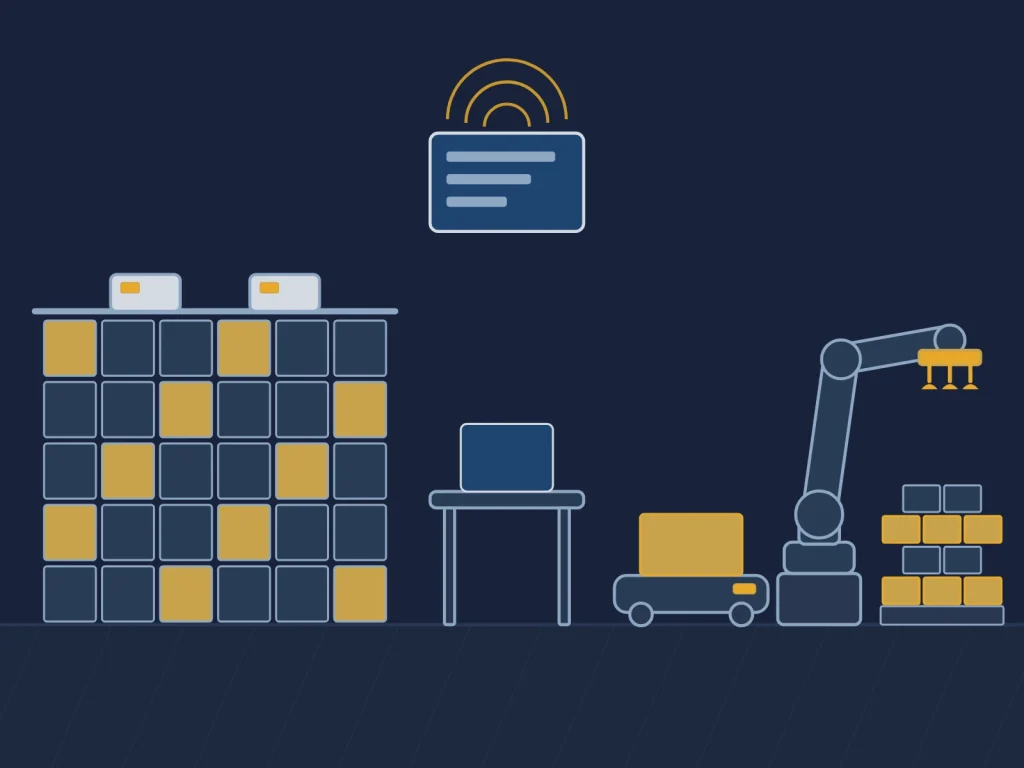
Key components
-
AMR fleet
Mobile robots that move goods without fixed floor infrastructure.
-
AS/RS or cube storage
High-density storage. May require building works and sufficient clear height.
-
Goods-to-person picking
Stations where stock comes to the picker.
-
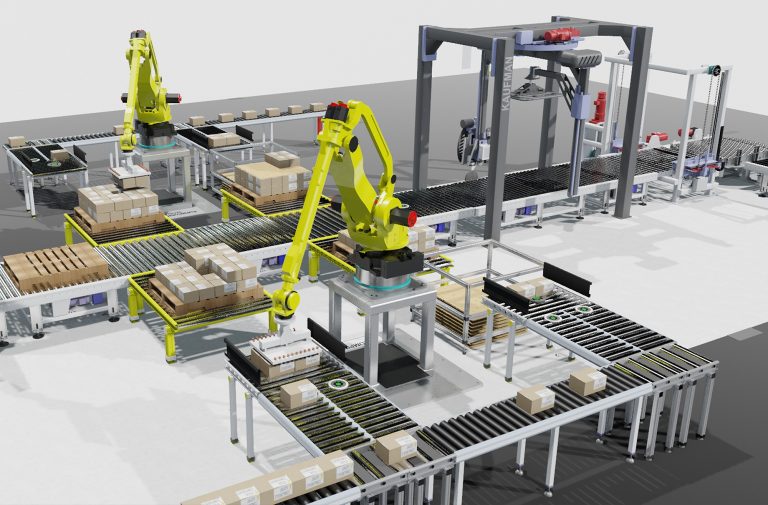
Palletising cell
End-of-line stacking at the end of a picking line.
-
Warehouse management system Ties it together
Connects systems that often come from different suppliers.
Industries Using Warehouse Robotics Automation
-
E-commerce and 3PL fulfilment
A major area of UK warehouse robotics investment.
-
Grocery and food retail
High throughput, temperature-controlled environments and varied order profiles can make automation particularly valuable, but also demanding to integrate.
-
Pharmaceutical and healthcare logistics
This is an area that has been slower to adopt, partly because of the validation and traceability requirements that come with the territory.
-
Manufacturing operations
Manufacturers use warehouse robotics differently from pure distribution operations.
-
ROI calculator
Will warehouse robotics pay back in your sector?
Put in your own wages, shifts and project cost to see a payback estimate in under a minute.
Work out your ROI
Components of Warehouse Robotic Automation
Autonomous Mobile Robots (AMRs) - Goods-to-Person Fulfilment
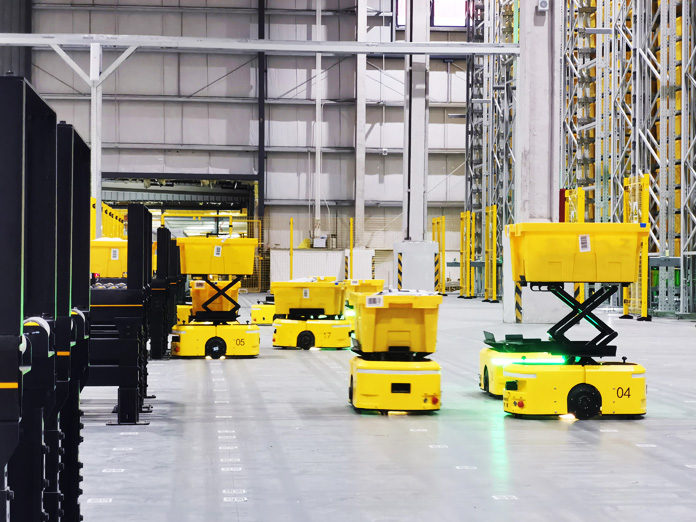
AMRs navigate warehouse floors independently using onboard sensors and mapping software rather than fixed tracks or markers. They bring shelving units or totes to a stationary picker rather than sending people walking the aisles. A picker walking to product may spend much of their shift travelling between locations. Goods-to-person systems move the inventory instead, allowing the picker to remain at a workstation and potentially handle several times more picks per hour. Most at home in e-commerce and 3PL fulfilment with high order volumes and varied SKU counts. Can be scaled by adding robots rather than making major structural changes to the facility.
AS/RS and Cube Storage - High-Density Warehouse Automation
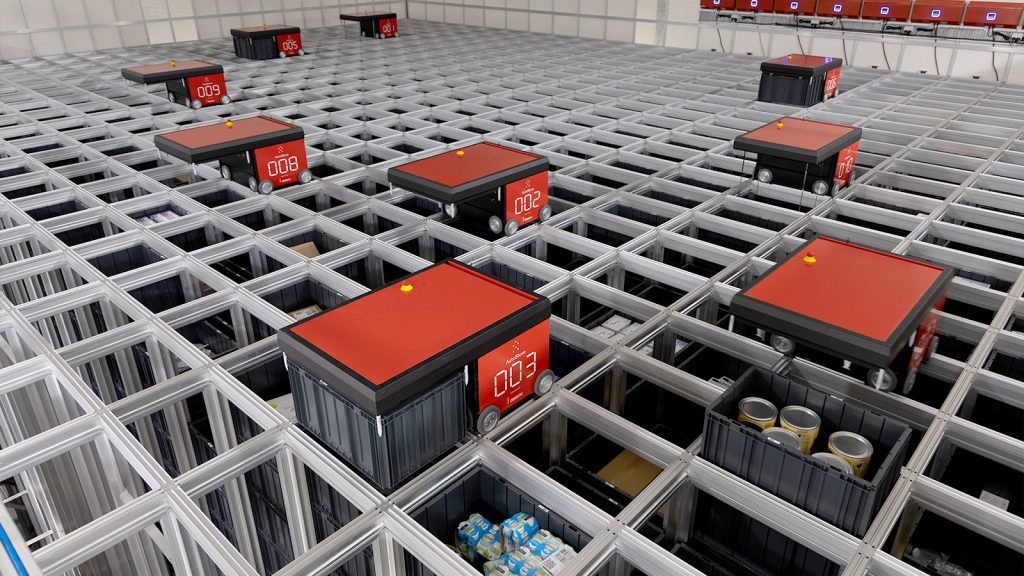
Automated Storage and Retrieval Systems (ASRS) use fixed racking with automated cranes, shuttles or cube-grid robots to store and retrieve goods at very high density. Cube-grid systems are increasingly used for high-density goods-to-person fulfilment.
The ceiling height requirement and upfront civil works make this a more serious infrastructure commitment than an AMR fleet — but for operations where space is expensive and inventory accuracy matters, the potential increase in storage density can be a major part of the business case.
Automated Guided Vehicles (AGVs) - Pallet Movement and Internal Transport
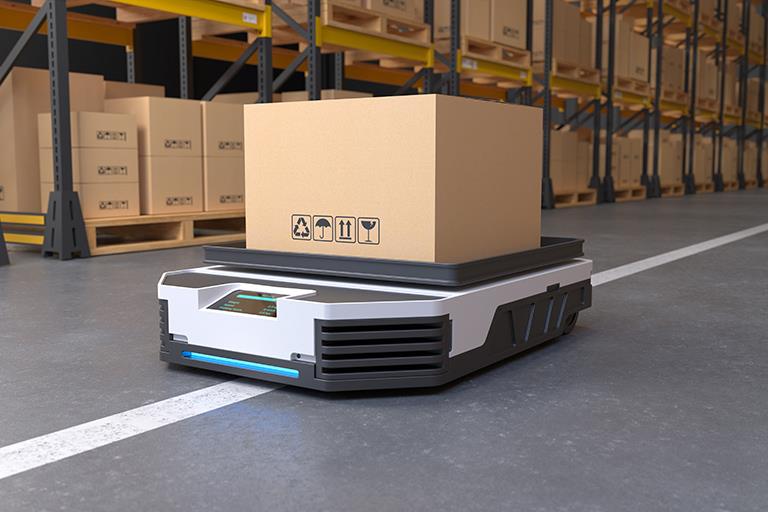
AGVs follow fixed routes using magnetic tape, laser guidance or floor markers to move pallets and heavy loads between defined points. They've been doing this reliably in large facilities for decades. Not the most flexible system if your layout changes frequently, but for consistent high-volume pallet movements between fixed points, they're proven and predictable. Better suited to large manufacturing sites and distribution centres than the more dynamic environments where AMRs can offer greater flexibility.
Conveyor and Sortation Systems - Parcel and Tote Routing
Automated conveyors and sorters route parcels, totes or packages to the correct dispatch lane using barcode scanning and divert mechanisms. Often the backbone of a larger automated operation rather than a standalone system. High-volume parcel operations need automated routing capable of handling large numbers of items at speed. Conveyors and sorters are often the backbone of these operations. Higher entry cost than a small AMR fleet, but capable of very high throughput when the application suits a fixed conveyor and sortation system.
How Much Does Warehouse Robotics Cost in the UK?
Investment range Indicative UK costs, excluding VAT
-
Simple system
Small AMR fleet (5–15 robots)
-
Medium complexity
Mid-scale AS/RS or cube grid system
-
High throughput
Full fulfilment-centre systems with extensive storage, picking, conveying and software integration.
Project timeline 30–56 weeks, design to sign-off
-
8–16 weeks
Design
Operational assessment and system design (depending on complexity of project)
-
12–24 weeks
Build
System build and procurement
-
8–12 weeks
Installation
Installation and phased go-live
-
2-4 weeks
Commissioning
Depending on the complexity of the installation.
Typical UK ranges from integrator quotes, for guidance only. Your cost depends on the parts, cycle time, safety and site.
UK integrators
-
 View profile
Element Logic
Logistics & Warehousing
-
 View profile
MotionTech
Automation and Software for Production, Intralogistics, and Warehouse Operations
Logistics & Warehousing
-
 View profile
Project Matcher
Get a shortlist of UK integrators for this job
Answer four questions about your project. We match you with UK integrators who do this work.
Get matchedFrequently asked questions
What's the difference between an AMR and an AGV?
Both move things around a warehouse floor, but the way they do it is quite different. An AGV follows a fixed route, generally magnetic tape, laser markers or floor guides and it does that same route reliably for years. Change the layout and you've got a problem. An AMR builds a map of the space and navigates it independently, which means it can re-route around an obstacle or adapt when you re-organise a pick zone. In practice, AGVs tend to win in large, stable environments with predictable pallet movements between fixed points. AMRs suit operations with more variability, changing SKU counts, seasonal layout shifts, e-commerce pick profiles that evolve. Neither is universally better. The honest answer is usually: it depends on whether your operation changes.
How much does a warehouse AMR fleet cost in the UK?
A small fleet of 5 to 15 robots typically lands somewhere between £150,000 and £500,000 pounds including integration and commissioning. That figure moves around a lot depending on the vendor, the WMS integration complexity and whether you need any changes to the physical environment.
What is Robotics-as-a-Service (RaaS)?
Instead of buying the robots outright, you pay a monthly or per-pick fee and the vendor handles deployment, maintenance and upgrades. Several AMR providers now offer this model, and it's worth understanding before you default to a capital purchase. It isn't always cheaper over a full lifecycle, so don't assume it is. What it does do is remove the upfront barrier and shift the performance risk toward the supplier.
Can smaller warehouses afford robotics automation?
More often than people expect, yes. The entry point for some applications is lower than many smaller operators expect, and RaaS models can reduce the upfront capital requirement. The realistic starting point for a smaller operation is usually a compact AMR fleet or a small cube storage system, both can potentially be deployed without major structural changes to the facility. A palletising cell at the end of a picking line is another common first project. The honest qualifier is that the numbers only work if the operation has sufficient volume and runs enough hours to justify the investment.
Do I need to replace my WMS to implement warehouse robotics?
Not necessarily, but you do need to understand what your WMS can and can't do before you commit to anything. Many modern robotics platforms can integrate with existing warehouse management systems through APIs or other software interfaces. Older or heavily customised systems are more complicated and can add significant cost and time to a project.