






What is robotic manufacturing?
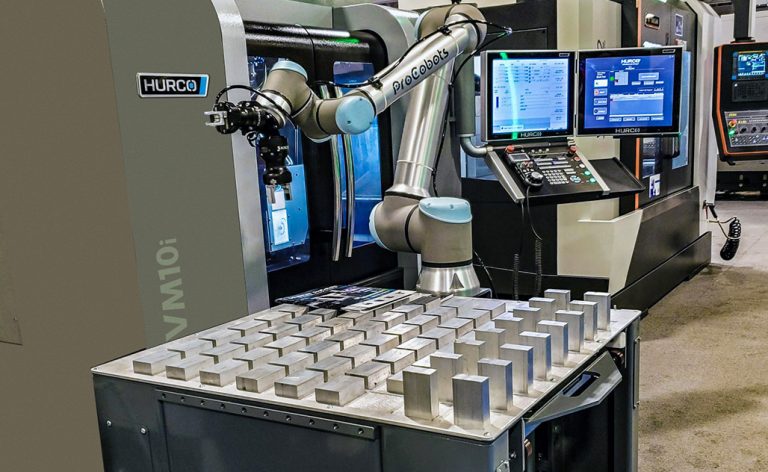
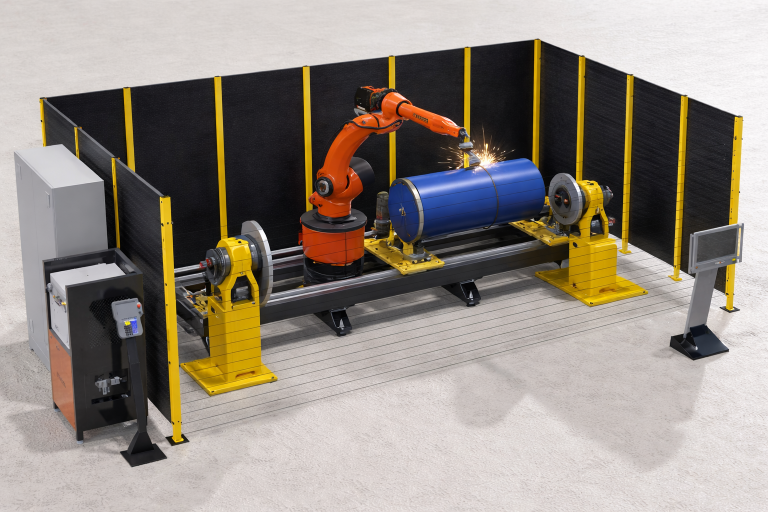
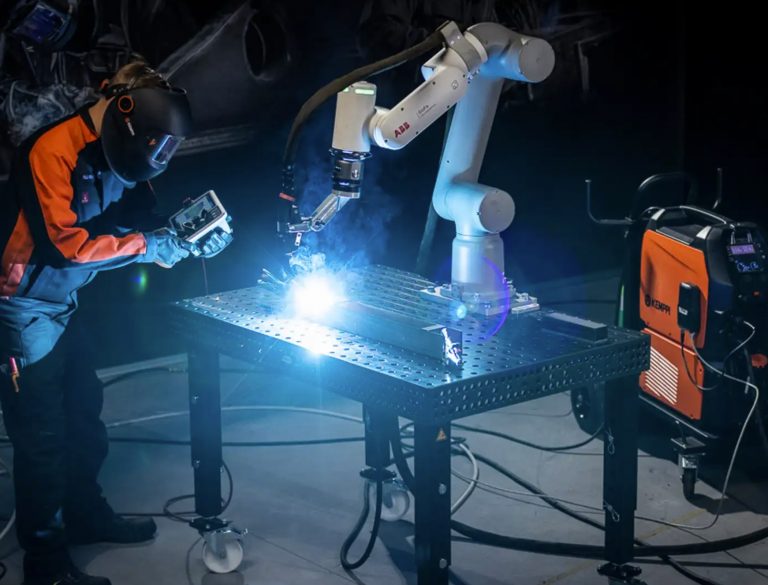
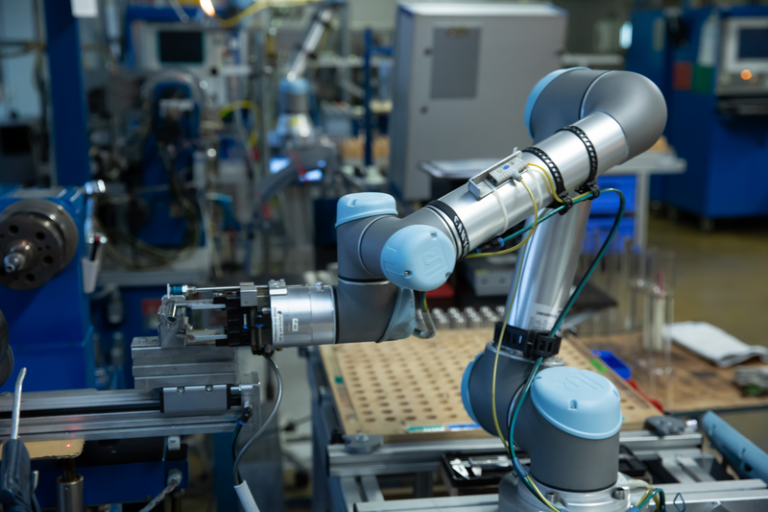
Robotic manufacturing uses programmable robots to carry out production tasks and to move and use components in a manufacturing process. The extent to which a system meets the requirements of an application determines the design of the system. One system may consist of a single robot while another may consist of a production cell with several coordinated robotic systems.
There are many aspects of a system that determine how well it performs. These aspects include gripper and tooling systems, part presentation, fixtures and safety systems, as well as the integration of the robot with the equipment it controls and the control software used to integrate the robot with the production systems.
Manufacturers may benefit from more consistent and repeatable processes, less manual handling, better utilisation of production equipment, and the ability to perform tasks over longer periods of time. The benefits are heavily dependent on the demands of the process, the variation of the parts to be processed, and how reliably parts can be presented for processing.
The first step in any system design is to understand the problem. After this, the variable such as cycle time, part variation, payload, reach, and quality, as well as changeover requirements, can be used to design the system.
Which robotic manufacturing approach fits your production?
| Best suited to | Main advantage | Main trade-off | |
|---|---|---|---|
| Standalone robot cell | One defined task, such as tending a machine or welding a component | Clear scope and a contained installation | May leave upstream or downstream bottlenecks untouched |
| Integrated production cell | Several linked tasks, machines or process stages | Coordinates operations and reduces manual transfers | More interfaces, engineering and commissioning |
| Flexible robotic system | Changing products, variable batches or multiple tasks | Can accommodate planned changes in production | Flexibility requires tooling, programming and changeover planning |
Is robotic manufacturing right for your process?
The key question: can the complete system repeatedly meet your production requirements under realistic operating conditions, not just complete an isolated robot movement?
Good fit
- The task is repetitive, physically demanding or requires consistent execution.
- Parts can be presented in a reasonably predictable position and orientation.
- Production demand is sufficient to justify the investment.
- The process can be standardised through tooling and software.
- The required cycle time, quality and uptime can be demonstrated in a trial
Think twice
- Every part is different and requires substantial judgement or rework.
- Product variation is high but there is no reliable method of identifying parts
- The required cycle time leaves no room for handling, inspection or changeovers
- Existing equipment cannot provide reliable signals or access for integration
Free planning tools
Plan your robotic manufacturing project
How to choose a robotic manufacturing integrator
Choosing an integrator means choosing the team responsible for making the complete process work. A supplier may be experienced with robot brands but have limited experience with your particular process, tooling or production environment.
| What to check | Evidence to ask for |
|---|---|
| Relevant application experience | Examples of comparable parts, processes and production requirements |
| Robot and tooling selection | Explanation of payload, reach, gripper and robot architecture choices |
| Cycle time and throughput | A documented cycle-time estimate and representative trial where appropriate |
| Integration with existing equipment | Proposed interfaces, control architecture and responsibility for machine modifications |
| Safety and compliance | Risk assessment, safeguarding design and documentation responsibilities |
| Reliability and maintainability | Planned maintenance, spare parts, fault recovery and access to service support |
| Training and handover | Operator and maintenance training, documentation and backup arrangements |
| Project delivery | Defined scope, acceptance criteria, milestones and commissioning plan |
Before you request a quotation
Integrators can assess your project more accurately when you provide a clear description of the process, production targets and operating constraints.
Use it in the Project Matcher- Parts and products: dimensions, weight, material, tolerances and product variations.
- Current process: a description or video of the task, including manual handling and machine interaction.
- Production requirements: target cycle time, hourly output, shifts, annual demand and expected downtime.
- Part presentation: how components arrive, how they are located and where finished parts need to go.
- Existing equipment: machine models, available interfaces, control systems and physical constraints.
- Quality requirements: inspection steps, traceability, reject handling and acceptance criteria.
- Business case: current labour input, bottlenecks, scrap or rework costs, and the improvement you want to achieve.
Frequently asked questions
Robotic manufacturing uses programmable robots to perform production tasks such as handling components, assembling products, tending machinery and carrying out repeatable process operations. Systems range from a single robot cell to integrated production lines involving several machines and coordinated processes.
Costs vary with the application and integration required. A straightforward cell may cost tens of thousands of pounds, while complex turnkey systems can reach several hundred thousand pounds or more. Obtain a quotation based on your parts, cycle time, tooling, safety requirements and existing equipment.
A cobot may suit flexible applications, smaller batches or tasks where people work nearby. Conventional industrial robots may be better suited to higher-speed production, heavier payloads or demanding reach requirements. The correct choice depends on the complete application, including the risk assessment.
Yes. Integrators can connect robots to existing machines, conveyors, fixtures, inspection equipment and control systems. Compatibility, machine interfaces, available space and safeguarding need to be assessed before implementation.
A relatively straightforward cell may be delivered in weeks or a few months, while bespoke integrated systems can take several months or longer. Design complexity, tooling development, equipment availability, factory modifications and commissioning all affect the schedule. Ask for a project plan with clearly defined milestones.
It can reduce the manual input needed for specific tasks and allow employees to focus on higher-value work. The financial benefit depends on the task, production volumes, staffing arrangements, running costs and whether the system delivers the expected output. Automation does not automatically mean that existing roles can be removed.
Buying a robot directly may be suitable if you already have the engineering capability to design, program and validate the application. Most businesses buying a complete production solution will need integration expertise for tooling, controls, safety, commissioning and support.
Start with your parts, current process, required output, cycle time, product variation, existing machinery and available floor space. Add your quality requirements and business objectives where possible. A short video of the current operation can also help an integrator assess feasibility.