Application guide Cobots · 2026
Collaborative Robots UK A cobot automation guide for manufacturing
Most UK manufacturers who've looked at collaborative robots and decided they aren't for them were looking at the wrong application. Full industrial robot cells, safety fencing, specialist programmers, months of integration work, the barrier is real and it puts automation out of reach for a lot of operations.
What is a collaborative robot?
Collaborative robots sit in a fundamentally different category to traditional industrial robots. They're designed for collaborative applications where people and robots may share a workspace, potentially without a full safety cage, depending on the application and risk assessment, they cost less than a traditional robot cell to buy and commission, and a simple application can go from order to operational in weeks rather than months.
This guide cuts through the marketing noise and tells you what cobots are actually suited to, where they fall short, and what a project looks like from first conversation to go-live. For a plain definition of the technology itself, our cobot glossary page covers it.
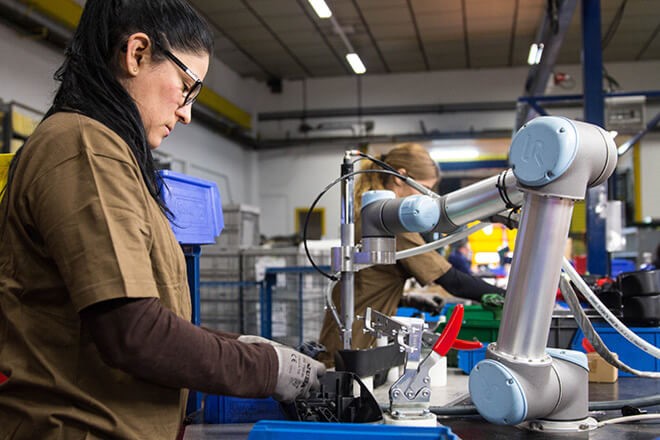
A collaborative robot, or cobot, is a robot arm built with force-limiting and collision-detection technology that allows it to operate near people without hard safety guarding in most applications (most, not all, you should always perform a risk assessment on any robot installation). Depending on the collaborative safety mode being used, the system may limit force and power, monitor separation from people, or stop the robot when a person enters a defined area.
In practice, that can mean a smaller footprint, faster deployment and a cell that's easier to redeploy when production demands change. A cobot cell can be designed for this kind of flexibility, although the extent depends on the tooling, integration and application.
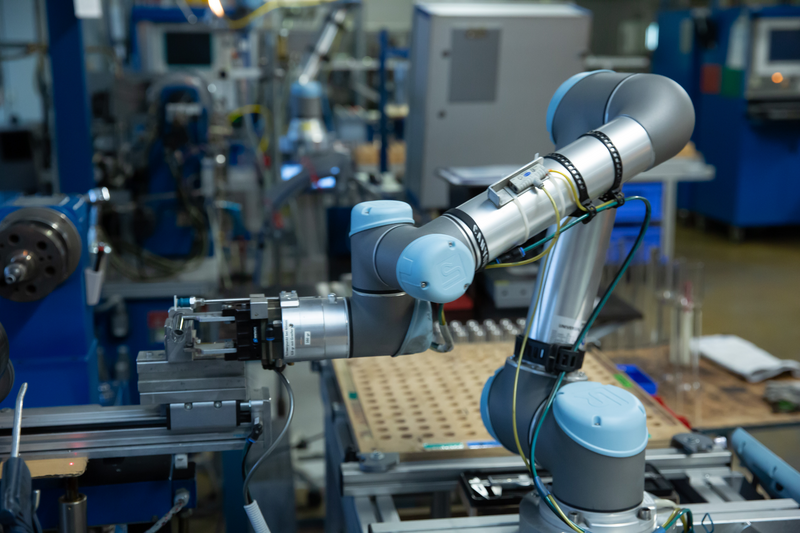
A cobot cell can be easier to redeploy when production changes.
Know the trade-off upfront
Cobots generally run slower than industrial robots in collaborative operation, and many common models have payloads in the 5–20kg range. If you need high speed or heavy payloads, a traditional robot cell is usually the better answer. A good integrator will tell you this before you commit.
Cobot palletiser vs robotic palletiserNot sure where to start? Compare 10 established UK cobot integrators
Find UK cobot integratorsWhy Automate With a Collaborative Robot?
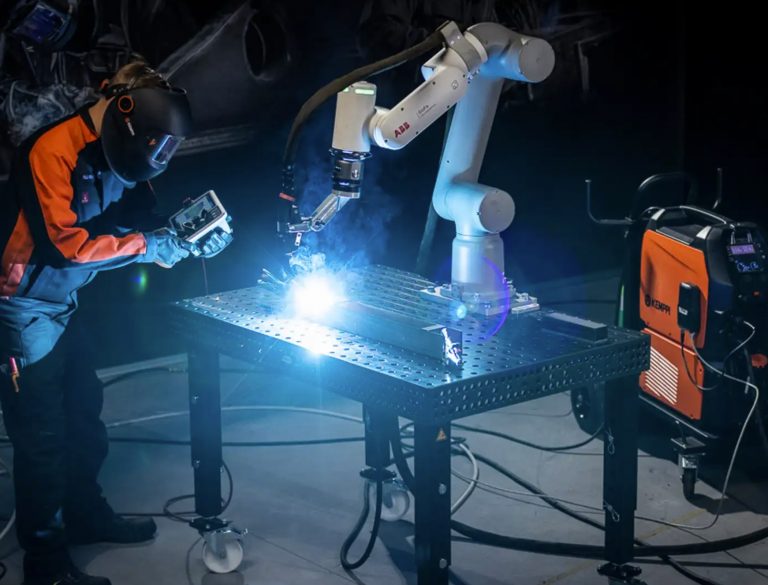
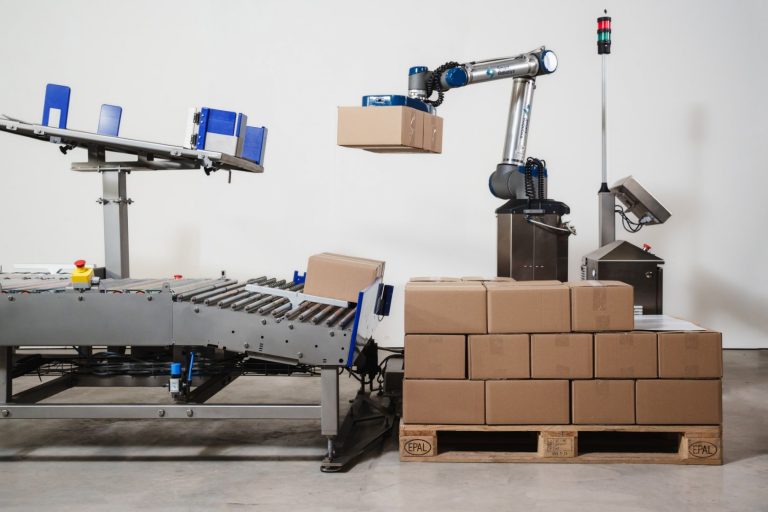
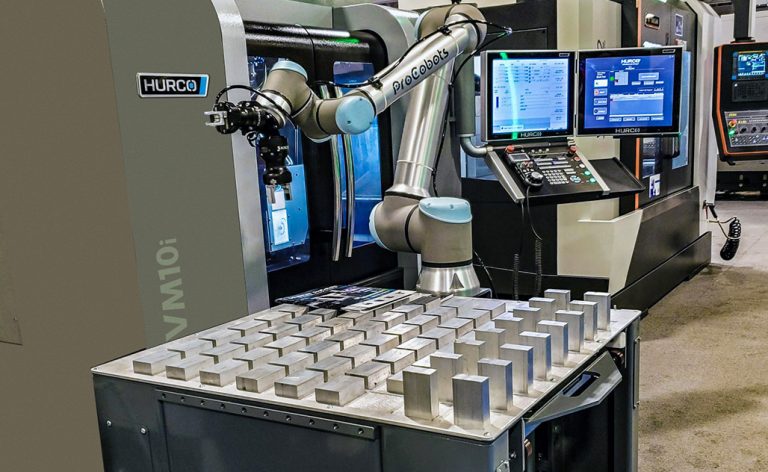
The most common cobot applications in UK manufacturing are repetitive tasks where manufacturers face ergonomic pressures, recruitment difficulties or the need for more consistent production: machine tending, assembly, inspection, screwdriving, and packaging. These are jobs where the problem isn't complexity, it's that people don't want to do them for 8 hours a day, and proving it year after year in your recruitment figures.
-
8 hrs
Jobs people don't want
Machine tending, assembly, inspection, screwdriving and packaging: repetitive work that drives injury and turnover.
-
<£40k
Within reach of SMEs
A simple cobot cell can start under £40,000 in some applications, bringing automation to firms that assumed it wasn't for them.
-
Redeploy when the line changes
When a product run ends, a cobot can be reprogrammed and moved to another task. Fixed automation can't do that cheaply.
Honest qualifier If you need high speed or a payload above 20kg, compare a traditional industrial robot directly. Cobots aren't always the right answer, and a good integrator will say so.
How Does Cobot Automation Work?
Five stages, and the question worth putting to your integrator at each one.
-
Application assessment
A good integrator treats this as a gate, not a formality. If the task needs more speed or payload than a cobot can handle, they should say so before you've committed. That's the first test of whether you're talking to the right company.
Ask: Is a cobot actually right for this task?
-
Risk assessment Mandatory
No safety cage doesn't mean safety is optional. A formal risk assessment decides what's needed: area monitoring, safety scanners, light curtains, a partial barrier, or for welding and cutting, sometimes full guarding anyway.
Ask: What safety measures does my application need?
-
Programming and teach-in
Tablet interfaces and drag-through programming mean simple applications don't need a specialist robot programmer. Complex jobs still do.
Ask: Can my own team make routine changes?
-
End-of-arm tooling
Set time aside to specify and design the end-of-arm tooling (EOAT). It's an essential component that's easy to overlook.
Ask: Off-the-shelf tooling, or custom?
-
Integration, and what comes next
Connecting to conveyors or vision systems adds time, so raise it early. Then ask what happens in 18 months when you want to move the cobot to a different task.
Ask: Who reprograms it later, at what cost, and is that in the support contract?
Key components

-
The cobot arm
Most arms in UK manufacturing come from a handful of makers.
Universal RobotsFanuc CRXABB GoFaKUKA LBR iisy / iiwa
-
End-of-arm tooling Most complexity
Grippers, suction cups, screwdrivers or sensors. Off-the-shelf suits standard pick and place; custom tooling adds cost and lead time, so scope it early.
-
Vision systems
Cameras handle variable part positions, inspection and precise assembly. Adds cost, but opens up jobs that would otherwise need fixtured parts.
-
Safety scanning and area monitoring
A scanner that slows or stops the robot when someone enters the zone. The risk assessment sets exactly what's needed.
-
Cell base and mounting
Floor-standing, wall-mounted or mobile. Cobots on an AMR base combine manipulation and mobility in one unit.
What Industries Use Cobots for Automation?
-
General manufacturing
Cobot applications are particularly common in general manufacturing.
AssemblyMachine tendingScrewdrivingInspection
-
Food & beverage
Cobots can offer greater flexibility than dedicated automation where product formats or requirements change often. Hygiene-rated variants exist for washdown.
Pick and placeTray loadingPortioningPrimary packaging
-
Electronics & light engineering
Many electronics and light-engineering tasks involve relatively small parts and moderate payloads, making cobots a potential fit.
Precise assemblyPCB handlingComponent placement
-
Automotive tier 2 & 3
High-volume Tier 1 lines often place greater demands on speed and cycle time; suppliers further down the chain may find cobots a better solution.
Assembly stationsInspectionWelding
-
Pharmaceuticals
Where traceability and audit trails are required, the cobot cell can be integrated with production and data systems to record process information.
DispensingInspectionLabellingKitting
-
ROI calculator
Will cobots pay back in your sector?
Put in your own wages, shifts and project cost to see a payback estimate in under a minute.
Work out your ROI
Typical costs and timelines for a cobot automation project
Investment range Indicative UK costs, excluding VAT
-
Simple system
Simple cobot cell (machine tending, basic pick & place). Entry-level automation using standard tooling and minimal integration.
-
Medium complexity
Dual grippers, magazine feeders or pallet systems, heavier parts, and often two machines sharing one robot.
-
High throughput
Multi-cobot or highly integrated automation system. Multiple robots, complex material handling, integrated production equipment and higher levels of control.
Project timeline 8–12 weeks, design to sign-off
-
2–3 weeks
Design
Application and risk assessment, system design.
-
4–6 weeks
Build
Cell build, tooling, programming and factory acceptance testing.
-
1 week
Installation
On-site install and first power-up.
-
1–2 weeks
Commissioning
Operator training, tuning and optimisation.
Typical UK ranges from integrator quotes, for guidance only. Your cost depends on the parts, cycle time, safety and site.
UK integrators
-
 View profile
Cobots Online Claimed
UK cobot automation experts supporting manufacturers with cobot solutions that boost productivity and improve quality
Automotive, General Manufacturing
-
 View profile
SV Robot Solutions Claimed
UK robotics integrator delivering bespoke automation systems, robotic cells, and ongoing support for manufacturers.
Automotive, General Manufacturing
-
 View profile
SP Automation & Robotics Claimed
Bespoke Automated Machines / Robotic Integrators UK
Food & Beverage, Pharmaceutical
See all 17 suppliers listed under Collaborative Robots (Cobots)
Project Matcher
Get a shortlist of UK integrators for this job
Answer four questions about your project. We match you with UK integrators who do this work.
Get matchedFrequently asked questions
Do cobots actually work without safety fencing?
Often yes, but it's not a given, and anyone who tells you otherwise without first doing a risk assessment is skipping a vital step. The absence of a fixed safety cage is what most people mean when they say 'no fencing needed', but that doesn't mean safety compliance goes away. Every cobot installation needs a formal risk assessment that determines what the application actually requires. This could include area monitoring, safety scanners, light curtains or in some cases a partial or full barrier. The risk assessment drives the answer to this question, and it's the integrator's job to conduct one. Ask about it early and the answer should be specific to your application, not a general document.
How much does a cobot cost in the UK?
You are rarely just buying a cobot on its own, there are a multitude of other items you will need to get your cobot working safely. A simple single-application cell, like machine tending or a very basic pick and place, typically lands somewhere between £40,000 and £90,000 including tooling, integration, and commissioning. When you start adding vision systems or additional robots for multi-cobot cells, the prices start to increase. If you find yourself adding more and more cobots or complexity to a cell you may be better off looking at more traditional, industrial robots. It is worth knowing that the robot arm itself is often not the biggest cost item. Tooling and integration work frequently account for more of the total than the hardware does.
What tasks are cobots best suited to?
Cobots are generally well suited to repetitive tasks with moderate to low payload requirements. This opens up opportunities in areas like machine tending, assembly, screwdriving, quality inspection, pick and place and packaging. Cobots are less suited to high-speed production lines, heavier payloads or applications where cycle time is the critical variable. If speed is what you need, the comparison with a traditional robot is worth running before committing to anything.
How long does a cobot project take?
A simple application, single arm, standard tooling, straightforward integration can go from order to operational in 8 to 12 weeks. Vision-guided or multi-station setups typically take longer, think 16 to 24 weeks. The risk assessment and any bespoke tooling fabrication are often the longer-lead items, not the cobot itself. Don't assume fast deployment until you've got the full scope confirmed.
What's the difference between a cobot and an industrial robot?
Industrial robots generally offer higher speeds and payloads, but their applications often require greater separation between people and the robot and more extensive safeguarding. Cobots are designed for collaborative applications where people and robots may share a workspace, subject to the required risk assessment and safeguarding. They are also often easier to reprogram or redeploy when production requirements change.