Application guide Cobot welding · 2026
Cobot Welding Systems UK Costs, ROI and suppliers
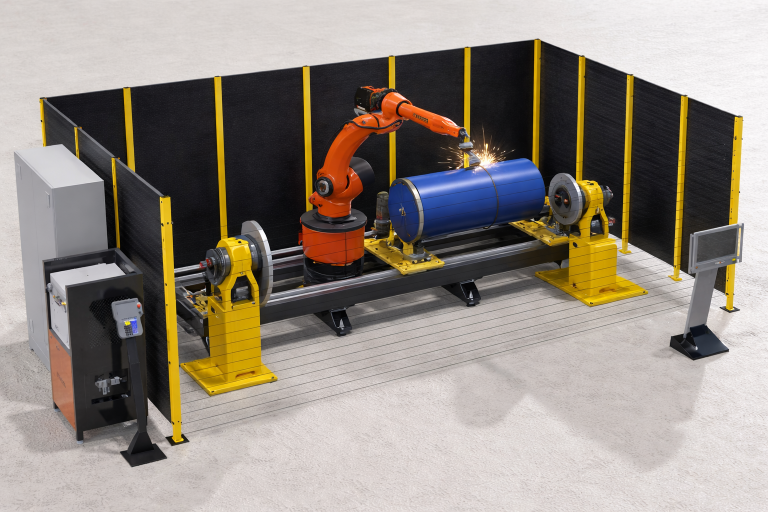
Cobot welding systems in the UK can typically cost between £30,000 and £150,000+, the exact figure is very dependent on the welding process, the complexity of the welding fixturing/jig that needs making and whether you're buying a complete turnkey cell or building around an existing setup. They're generally not the fastest option compared with a traditional robotic welding cell, but they have other benefits.
What is cobot welding?
For manufacturers with varied part types, lower batch sizes, or limited floor space, cobot welding can be a practical route into welding automation.
The question most manufacturers are actually asking is whether a cobot makes more sense than a traditional robotic welding cell for their application. This guide answers that directly: how cobot welding works, what drives the cost, which applications it suits best, and what to look for when choosing a UK integrator.
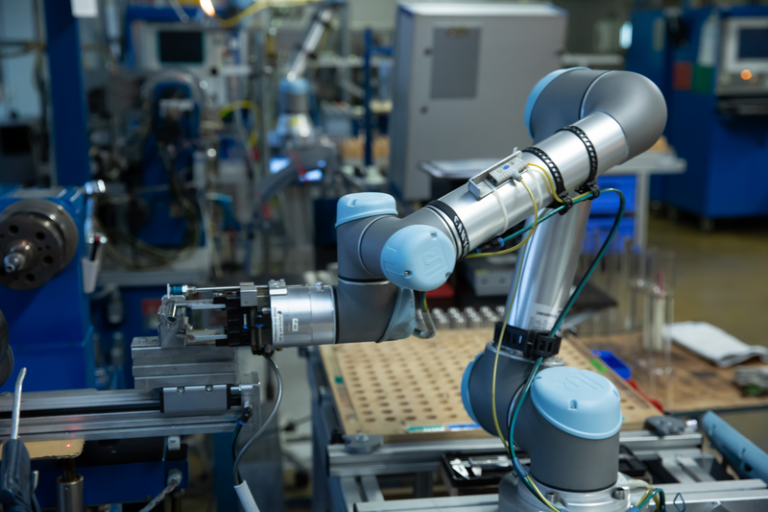
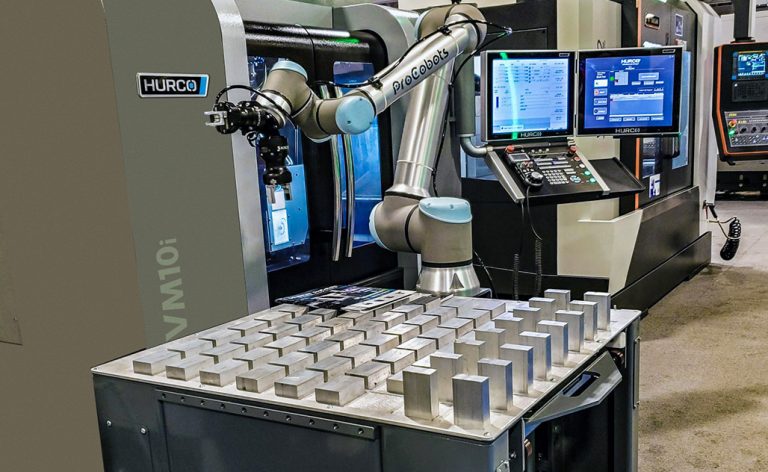
A cobot (collaborative robot) welding system is an automated welding setup built around a collaborative robot arm rather than a conventional industrial robot. The cobot holds the welding torch and follows a programmed path across the weld joint, just as a traditional welding robot does.
The key difference is flexibility. Cobots can be easier to reprogram and redeploy than dedicated industrial cells, making them particularly attractive for manufacturers producing varied part types, shorter runs or products that change frequently.
That doesn't mean a cobot is automatically the better choice. For high-volume, highly repetitive production, a conventional industrial robot may deliver higher throughput and better economics. The right choice depends on the part mix, weld process, batch profile, cycle time and required level of automation.
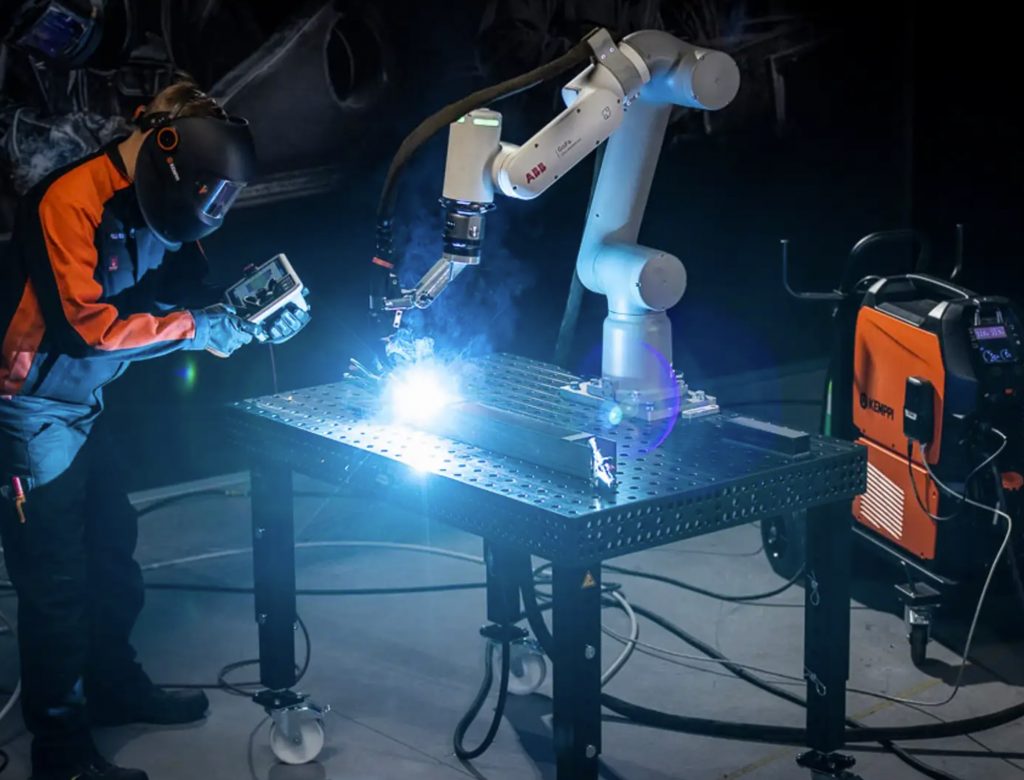
One important distinction: a cobot's safety functions don't remove the hazards created by welding itself. Arc radiation, welding fume and heat still need to be controlled, regardless of whether the torch is held by a human, cobot or industrial robot.
If the part moves, the weld misses.
Cobots don't remove welding hazards
Arc flash, fumes and heat remain hazards whatever holds the torch. Welding screens, fume control and appropriate safeguarding may be required, with the measures determined through the application risk assessment and relevant machinery-safety requirements.
Weighing up a full industrial cell? Read the robotic welding guide
Find welding integratorsWhy automate with a cobot welding cell?
One of the main reasons UK manufacturers are looking at collaborative robot welding is the difficulty of finding and retaining skilled welders. The UK welder shortage is well documented and shows no sign of resolving without significant investment in training and apprenticeships from businesses and government. Wages for trained and experienced welders are rising and experienced welders are retiring much faster than new ones are being trained.
-
1 operator
A shift of welds, one welder
A skilled welder can program and oversee the cell, rather than performing every weld manually.
-
£30k
A lower-cost way in
Entry cells start around £30,000, with simpler programming and faster changeovers than a dedicated industrial cell.
-
Repeatable weld quality
The priority isn't always throughput. It's repeatable welds at a cost that suits high-mix, lower-volume work.
Honest qualifier You still need welding knowledge in the business: someone with appropriate welding and process knowledge to program and set up the cobot, and to handle the jobs it isn't suited to.
How a cobot welding cell works
Five stages, and the question worth putting to your integrator at each one.
-
Process and part review
Confirm the weld processes, part mix and batch sizes. Cobot welding cells can be configured for different welding processes, including MIG and TIG, but the available processes depend on the robot, power source, torch package and application
Ask: Which processes does your power source and torch package support?
-
Fixture design
The fixture or jig holds the part during the weld cycle. Its design matters as much as in a conventional cell: if the part moves, the weld misses.
Ask: How quickly can fixtures be changed between parts?
-
Risk assessment Mandatory
The application risk assessment determines the safeguarding and protective measures required for the cell, including how operators interact with the robot and welding process.
Ask: What safeguarding measures does the risk assessment require? Safety documentation?
-
Programming
Lead-through teaching: an operator guides the arm along the weld path and the controller records it. Tablet and offline programming are options too.
Ask: Can my welders program new parts themselves?
-
Production and changeover
The operator loads the part, starts the cycle and unloads the finished part. A twin-fixture layout lets them load one side while the cobot welds the other.
Ask: Would a twin-fixture layout pay for itself here?
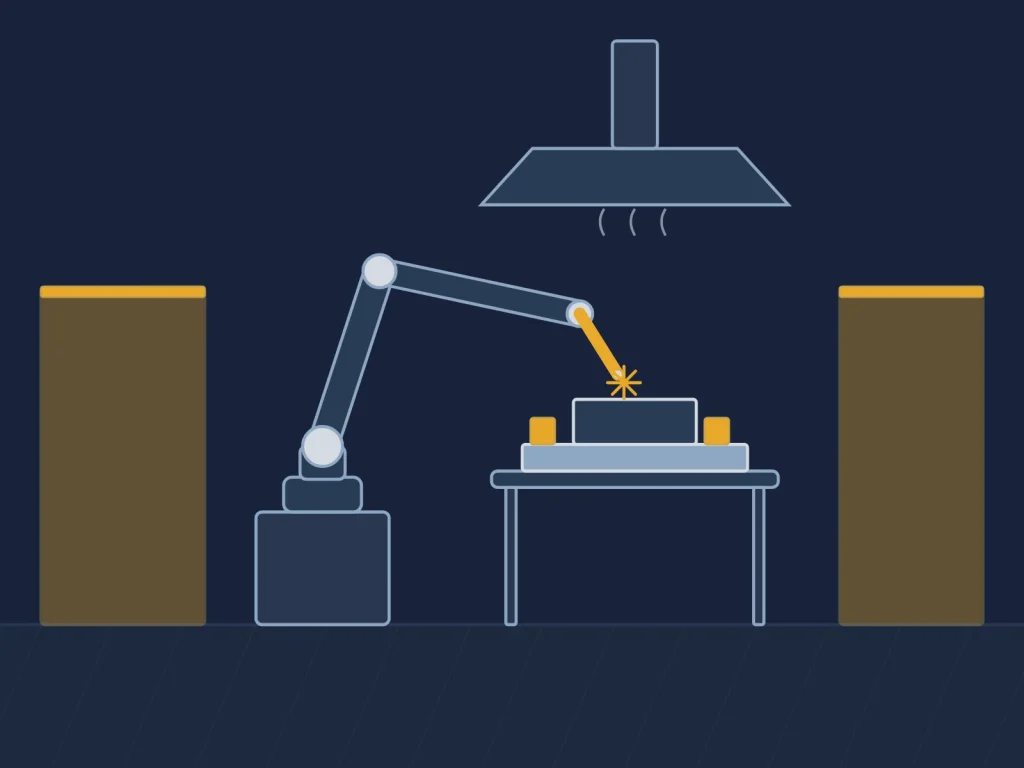
Key components
-
Cobot arm
Mounted on a fixed base or, for more flexible deployments, on rails.
-
Welding torch
The end effector, matched to the welding process.
MIGTIG
-
Fixture or jig Critical component
Holds the part in position through the weld cycle. Twin fixtures let loading and welding overlap.
-
Fume extraction
Controls welding fumes; additional ventilation or heat management may be required depending on the process.
-
Screens and guarding
Welding screens and other protective measures may be required depending on the process, layout and risk assessment.
What industries are using cobot welding cells?
-
Metal Fabrication
Cobot welding is a natural fit for metal fabrication shops running mixed part types.
-
Agricultural Machinery
Agricultural equipment manufacturers typically deal with high part variety across frames, brackets, and sub-assemblies, much of it structural.
-
General Engineering
Contract manufacturers can be a strong fit where part variety and batch sizes make dedicated automation harder to justify.
-
Automotive Tier 2 and Tier 3 Suppliers
Not every automotive supplier is running the volumes that justify a high-throughput industrial welding cell.
-
Furniture and Shopfitting
Steel and aluminium structural frames for commercial furniture and shopfitting are typically produced in short runs with regular design changes.
-
Defence and Specialist Engineering
Lower-volume precision welding can make flexibility and process control particularly important.
-
ROI calculator
Will cobot welding pay back in your sector?
Put in your own wages, shifts and project cost to see a payback estimate in under a minute.
Work out your ROI
Sector guide: Automotive Automation in the UK | Robotics, Welding & Assembly Systems
Typical costs and timelines for cobot welding cells
Investment range Indicative UK costs, excluding VAT
-
Simple system
Entry-level cobot welding package: robot arm, torch, basic fixture and light guarding.
-
Medium complexity
Custom fixturing, twin-station layout, fume extraction, safety assessment, CE/UKCA documentation and commissioning.
-
High throughput
Rotary positioners, offline programming, multi-process capability (MIG and TIG) or integration into a wider line.
Project timeline 9–17 weeks, design to sign-off
-
3–5 weeks
Design
Standard cell. Up to 8 weeks where custom fixturing or process development is complex.
-
4–8 weeks
Build
Pre-engineered or semi-standard cell. Up to 14 weeks for a fully custom build.
-
1–2 weeks
Installation
Cobot cells can be smaller and lighter than industrial cells, which can simplify installation.
-
1–2 weeks
Commissioning
Weld trials, program refinement and operator training. Allow longer for many part programs.
Typical UK ranges from integrator quotes, for guidance only. Your cost depends on the parts, cycle time, safety and site.
UK integrators
-
 View profile
SV Robot Solutions Claimed
UK robotics integrator delivering bespoke automation systems, robotic cells, and ongoing support for manufacturers.
Automotive, General Manufacturing
-
 View profile
-
 View profile
Advanced Automation and Assembly Ltd (A3L)
Specialist in Automated Welding, Finishing and Machine Tending Operations
General Manufacturing
Project Matcher
Get a shortlist of UK integrators for this job
Answer four questions about your project. We match you with UK integrators who do this work.
Get matchedFrequently asked questions
What's the difference between a cobot welding system and a traditional robotic welding cell?
The main differences here are around the speed that the robot will work, the flexibility you have for changeovers and new products and the safety infrastructure needed. A traditional robot welding cell with an industrial robot, such as a FANUC ARC Mate, is typically designed for high-volume, fast, repeatable production and generally requires more extensive safeguarding. A cobot welding system trades away some of that speed for flexibility. They can be easier to program and re-program, have lighter guarding in appropriate applications, and a much smaller footprint in your factory.
How much does a cobot welding system cost in the UK?
Small cobot welding cells can start at around £30,000–£35,000, while a more fully specified system is commonly in the £55,000–£100,000 range. More complex systems with positioners, multiple processes or wider integration can reach £150,000+.
Can cobots do both MIG and TIG welding?
Cobot welding systems can be configured for MIG and TIG, but the available processes depend on the robot, power source, torch package and application.
Do cobot welding systems need safety fencing?
Cobots incorporate safety functions intended to support collaborative applications, but those functions do not automatically make a welding cell safe to operate without additional protective measures. The process of welding itself introduces risks that need to be mitigated, regardless of the robot type. Hazards like arc flashing, heat and fumes mean that protective measures such as welding screens, fume extraction and operator separation are typically required. The exact safety requirements will depend on your own formal risk assessment and it is an essential part of any robotic welding project.
What batch size makes cobot welding worth it?
There's no fixed minimum, but the general answer is that cobots become more viable at lower batch sizes than traditional industrial cells because changeover is faster. Batch sizes of 20 to 50 parts per run can be commercially viable if your setup is right and you have well designed welding fixtures for quick changeover times. If you're running very small batches with highly varied geometry, manual welding is probably still the right answer. If you're running consistent batches of 30 or more on the same part family, cobot welding is worth costing properly.