
Most cobot vs traditional robot comparisons stop at the purchase price. That’s the most visible number and the one most likely to lead you to the wrong decision. It’s understandable but it’s also the least complete basis for a decision you’ll be living with for the next 10–15 years.
Not sure what type of palletiser you should be looking at? Have a look at our Palletising System Selector tool.
This post runs the full cost picture, capital, installation, guarding, programming, maintenance, flexibility, and residual value. If you haven’t already read our basic cobot vs traditional palletiser overview, start there. This one goes considerably deeper on the numbers so read this if you’re not sure of the basics of robotic palletising systems.
Before going any further are you sure you are ready to automate? Here are some signs that you are and some that you aren’t.
Capital cost: cobot cell vs traditional robot cell
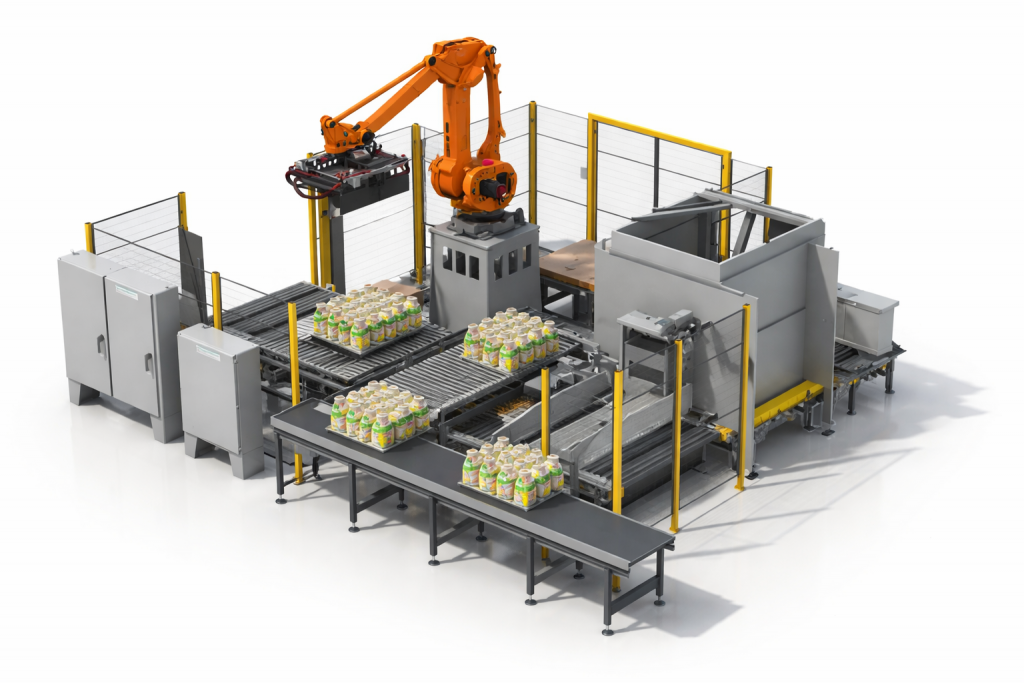
A cobot-based palletising cell from a UK integrator typically starts around £40,000–£70,000 for a single-product application with standard infeeds. A traditional industrial robot cell, which needs full safety fencing, specialist programming, and a more involved control system , typically starts around £90,000–£150,000 and can go well beyond that for high-throughput or multi-line applications.
The cobot price advantage is real, but it narrows as requirements scale up. At higher cycle rates (above roughly 700-800 cases per hour), you’ll often need a traditional industrial robot regardless of budget preference, most cobots simply aren’t fast enough for that workload.
It’s also worth noting that “cobot cell price” varies significantly by integrator. Two quotes for identical cobot hardware in a similar application can differ by 25–35%. This isn’t unusual in the UK market, there’s genuine variation in build quality, integration expertise, and what’s included in the price. Getting 3 quotes isn’t paranoia; it’s due diligence.
For more details on costs and what is involved, have a read of our guide to cobot palletising costs.
Safety guarding and installation costs
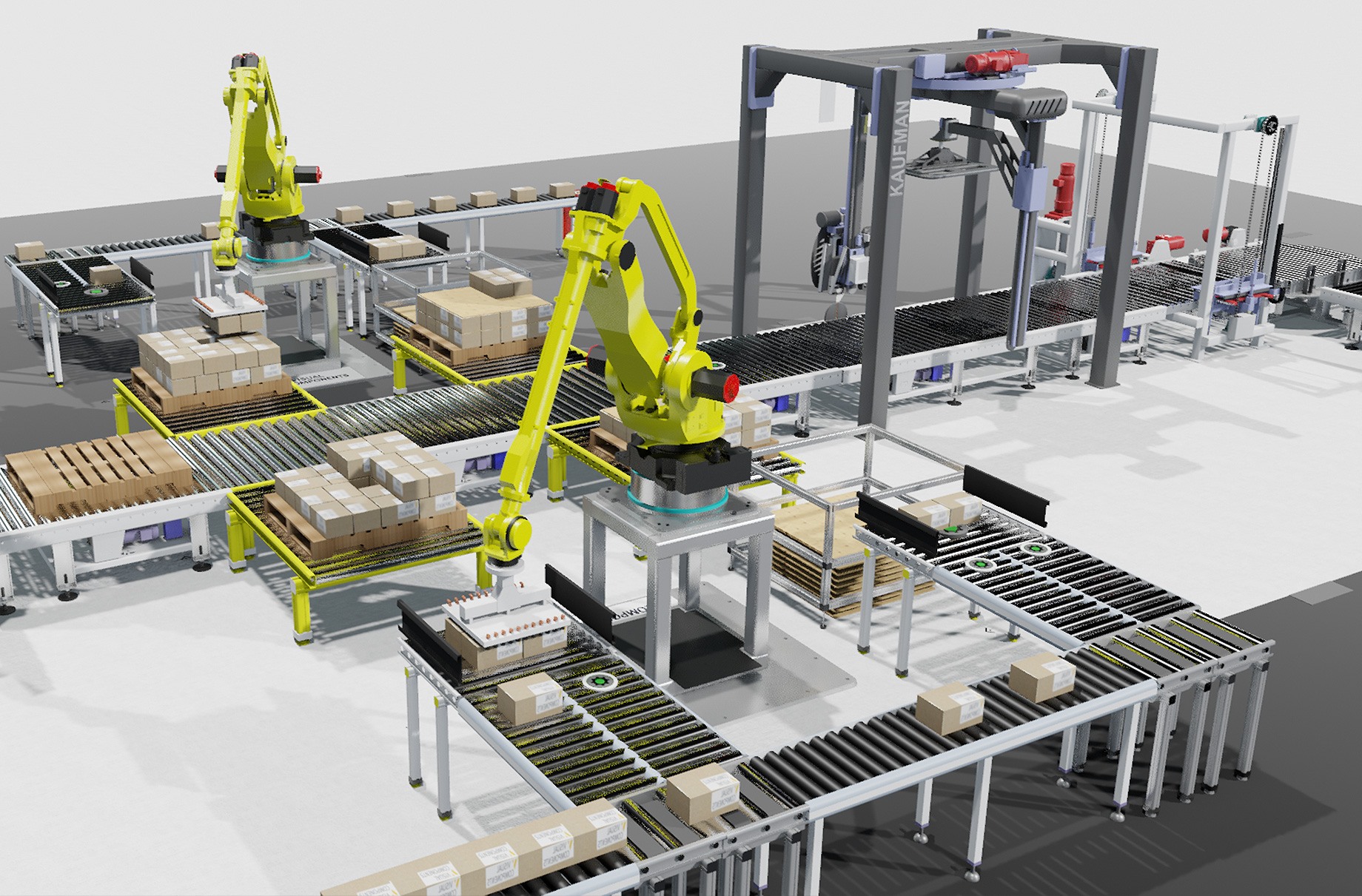
This is where the cobot cost advantage can widen in ways people don’t always model in ROI calculations. Traditional industrial robots operate at speeds that require a full safety fence, a physical perimeter that takes up floor space, costs money to build, and needs to be interlocked properly. In a constrained factory environment, that footprint has real value.
A properly specified cobot cell can often operate without full guarding, the robot’s built-in force-limiting and sensing technology means it can slow or stop when a person enters its operating zone. This doesn’t mean cobots are completely unguarded (a risk assessment will still likely require some barriers and area scanners), but the requirement is meaningfully lighter than for a traditional system, in most cases.
Installation and commissioning time reflects this too. Cobot cells typically take 2–6 weeks to install on site. Traditional systems generally run 6–12 weeks, partly because of the complexity of the guarding infrastructure. If you’re trying to automate without shutting down production for an extended period, that timeline difference matters.
Throughput and payload
Traditional industrial robots are faster. The best palletising robots handle 1,200–1,500 cycles per hour. Most cobots max out at 600–900 cycles per hour in palletising applications. For a high-volume operation this isn’t a preference, it’s a requirement. If your line demands 1,000+ cases per hour, a cobot isn’t the right tool.
We’ve got a tool that can assist with this particular decision, try our palletising throughput calculator to see if a cobot or traditional robot are more suited.
Payload is a related constraint. Cobots generally handle up to around 20–35kg max including the end-of-arm tooling. That’s sufficient for most standard cases and retail-format products. But if you’re palletising 25kg bags, heavy catering packs, or large-format industrial cases, a traditional robot’s payload capacity may be the deciding factor before cost even enters the conversation.
Programming and changeover costs
This is a running cost that gets underweighted in most comparisons. When you need to set up a new pallet pattern for a new SKU or a changed customer requirement, what does that actually cost?
For a traditional industrial robot, a programming change typically requires either an in-house robotics programmer (a specialist role) or a call-out from your integrator or the robot manufacturer. That’s often a day’s work minimum, and call-out rates from UK robotics engineers tend to run from £600–£1,200 per day. If your product mix changes regularly, those costs accumulate.
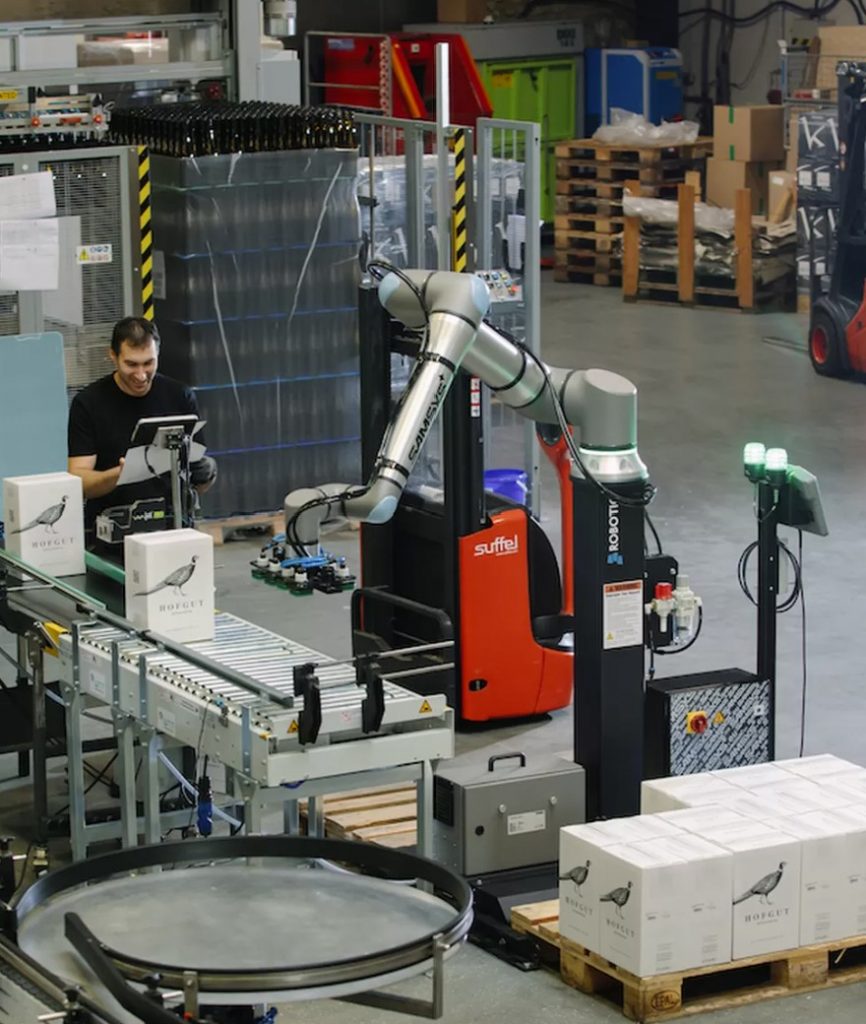
Cobots are designed to be more accessible. Most cobot manufacturers have put significant effort into making their teaching interfaces usable by non-specialists. Reprogramming a cobot for a new pallet pattern is typically a task a trained in-house operator can handle in a few hours rather than a day-long specialist job. Over 5 years of operation in a changeable production environment, that difference in changeover cost is substantial.
Ongoing maintenance
Spare parts costs are broadly similar between the two types, both need periodic replacement of motors, sensors, and end-of-arm tooling components. The difference shows up in the labour costs for maintenance rather than the parts themselves.
Service contracts from UK integrators typically run £3,000–£8,000 per year for a single cell. Traditional systems sit at the higher end of that range, partly because the guarding, conveyors, and control infrastructure add components that need covering. Response time commitments, how quickly an engineer arrives when something breaks, vary considerably between providers and are worth comparing explicitly before you sign anything (try talking to other customers to get feedback on this).
Cobot downtime events tend to be shorter, partly because the systems are designed to be more diagnostically transparent (most have built-in monitoring that tells you what’s wrong before the engineer arrives) and partly because fewer specialist skills are needed to resolve common faults. A traditional robot fault waiting for an available programmer can cost you days of production.
Flexibility and residual value
Cobots are easier to redeploy. If your product mix changes substantially, you want to move the system to a different line, or you simply want to sell it on, a cobot cell is significantly more portable than a traditional system. Traditional robot installations are typically designed around a specific layout, throughput, and product, repurposing them requires re-engineering that can cost nearly as much as buying something new.
For a growing or evolving business, the flexibility argument is worth weighting properly. A cobot that can be redeployed when your operation changes is worth more over its lifetime than a purchase price comparison suggests. Think of it as optionality with a value.
Side-by-side summary
| Cobot cell | Traditional robot cell | |
| Typical capital cost | £40k–£90k | £80k–£200k+ |
| Safety fencing | Often lighter / reduced | Full perimeter required |
| Installation time | 2–6 weeks | 6–16 weeks |
| Max throughput | 600–900 cases/hr | 1,200–1,500 cases/hr |
| Max payload (incl. EOAT) | ~20–35kg | 50kg–200kg+ |
| Reprogramming ease | High — often in-house | Low — specialist required |
| Redeployment flexibility | High | Low |
| Annual service contract | £3k–£6k | £5k–£8k |
| Best for | SME, 1–2 shifts, moderate throughput | High volume, heavy payload, 3 shifts |
Which wins?
For most UK SMEs running 1–2 shifts, standard case weights, and moderate throughputs, a cobot system is usually the better total-cost-of-ownership answer. The lower capital cost, faster installation, accessible programming, and redeployment flexibility tip the balance, even if the unit cost of the cobot hardware itself is closer to a traditional robot than it looks.
For high-volume, high-payload, 3-shift operations, a traditional industrial robot is typically the right call, both because the throughput ceiling of a cobot is a genuine constraint and because at that scale the specialist programming cost is easier to absorb.
The best way to make the comparison concrete is to take your specific throughput, product weight, and site constraints to 2 or 3 integrators and ask for quotes on both options. The project matcher can put you in front of integrators who work with both types. And if you want to run the payback numbers yourself before those conversations, the automation ROI calculator lets you model both scenarios side by side.
Once you’ve settled on cobot vs traditional, you can find a palletising integrator in the UK who specialises in that type.
Frequently Asked Questions
How much cheaper is a cobot palletiser than a traditional robot palletiser?
On capital cost alone, a cobot cell typically starts at £40,000–£70,000 compared to £90,000–£150,000 for a traditional industrial robot cell, so the gap at entry level is roughly £50,000–£80,000. However, the difference narrows as throughput requirements increase, and when you factor in lower guarding costs, faster installation, and cheaper reprogramming, the total cost advantage of a cobot over a 10-year period is often larger than the purchase price gap suggests.
How long does it take to install a cobot palletiser vs a traditional system?
A cobot cell typically takes 2–6 weeks to install and commission on site. A traditional industrial robot cell generally runs 6–12 weeks, largely because of the complexity of the safety fencing, conveyor integration, and control infrastructure involved. If minimising production disruption during installation is a priority, that timeline difference is a meaningful factor in the decision.
Can a cobot palletiser handle the same throughput as a traditional robot?
Not at the top end. Most cobots max out at 600–900 cases per hour in palletising applications. Traditional industrial robots can handle 1,200–1,500 cycles per hour. For operations running above roughly 700–800 cases per hour, a traditional system is usually the only viable option regardless of budget preference. Below that threshold, a cobot will typically handle the workload without constraint.