
Automated Guided Vehicle (AGV)
Why an AGV matters
For high volume and repetitive transport tasks, like moving pallets from a production area to a dispatch area. A repeatable task between two fixed points and using the same route every time, an AGV is often one of the most cost effective solutions you can use. It will do exactly the same thing, every single time.
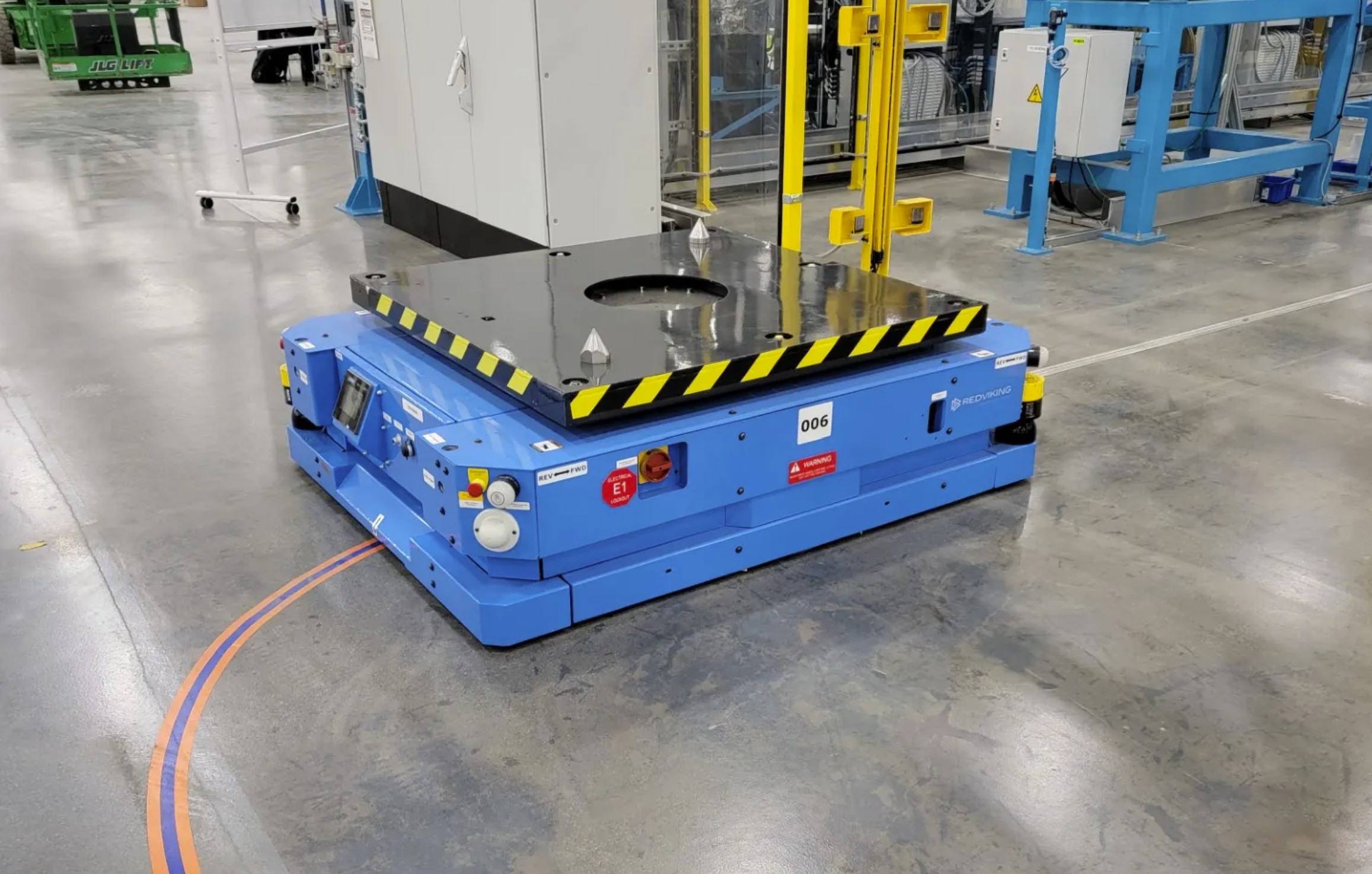
That predictability is the point. Because the route doesn't change, the system is simple to operate and maintain. Operators know exactly where an AGV will be and when. That makes it straightforward to integrate with production schedules and other automated systems.
AGVs aren't the right answer for everything. They need a stable layout and they don't adapt well to change. But in environments where the routes don't move and throughput is high, they can run continuously for years with minimal intervention. The ROI case is usually straightforward.
How does an AGV work?
An AGV's route is defined by a guidance system. There are several types in common use. Magnetic tape or inductive wire embedded in the floor gives the vehicle a physical path to follow. Laser guidance uses reflective targets mounted on walls or racking, with the vehicle's laser scanner triangulating its position as it moves. Natural navigation AGVs, sometimes called free-navigation, use a stored map of the facility, though they still follow pre-defined routes rather than choosing their own, like an AMR.
The vehicle picks up a task from a central control system, follows its route, and either deposits its load automatically at a fixed drop point or communicates with another system like a conveyor to hand off the goods.
Most AGV installations include traffic management software that coordinates multiple vehicles, preventing collisions at intersections and managing charging cycles. Integration with WMS or ERP systems means tasks can be triggered automatically from production or picking events, with no manual input required once the system is running.
What Can You Use an AGV For?
- Pallet transport from production lines to storage or despatch
- Raw material delivery to manufacturing cells
- Towing trailers between production and warehousing areas
- Loading dock-to-storage movement in distribution centres
- Inter-floor transport via freight lifts in multi-storey facilities
- Roll-cage and stillage handling in food and beverage production
UK Integrators Offering This Solution


Geek+
Autonomous mobile robots for warehouse and fulfilment operations

Related Application Guides
![Warehouse AMR Guide: Autonomous Mobile Robots UK [2026]](https://automationworld.co/wp-content/uploads/warehouse-amr-300x225.jpg)
Warehouse AMR Guide: Autonomous Mobile Robots UK [2026]
UK warehouses are running out of people and running out of time. The transport and storage sector has recorded some of t…
View Guide
Warehouse Robotics UK: A Buyer’s Guide to Automation Systems
UK warehouse operators continue to face recruitment and retention challenges. Robots don't fix the people problem entire…
View Guide