
Goods-to-Person (GTP)
Why Goods-To-Person Technology is important in warehouse automation
Most warehouse labour is spent walking, not actually picking product. In a manual operation, a picker can cover ten to fifteen miles in a single shift moving between rack locations. Goods-to-person technology cuts that to zero.
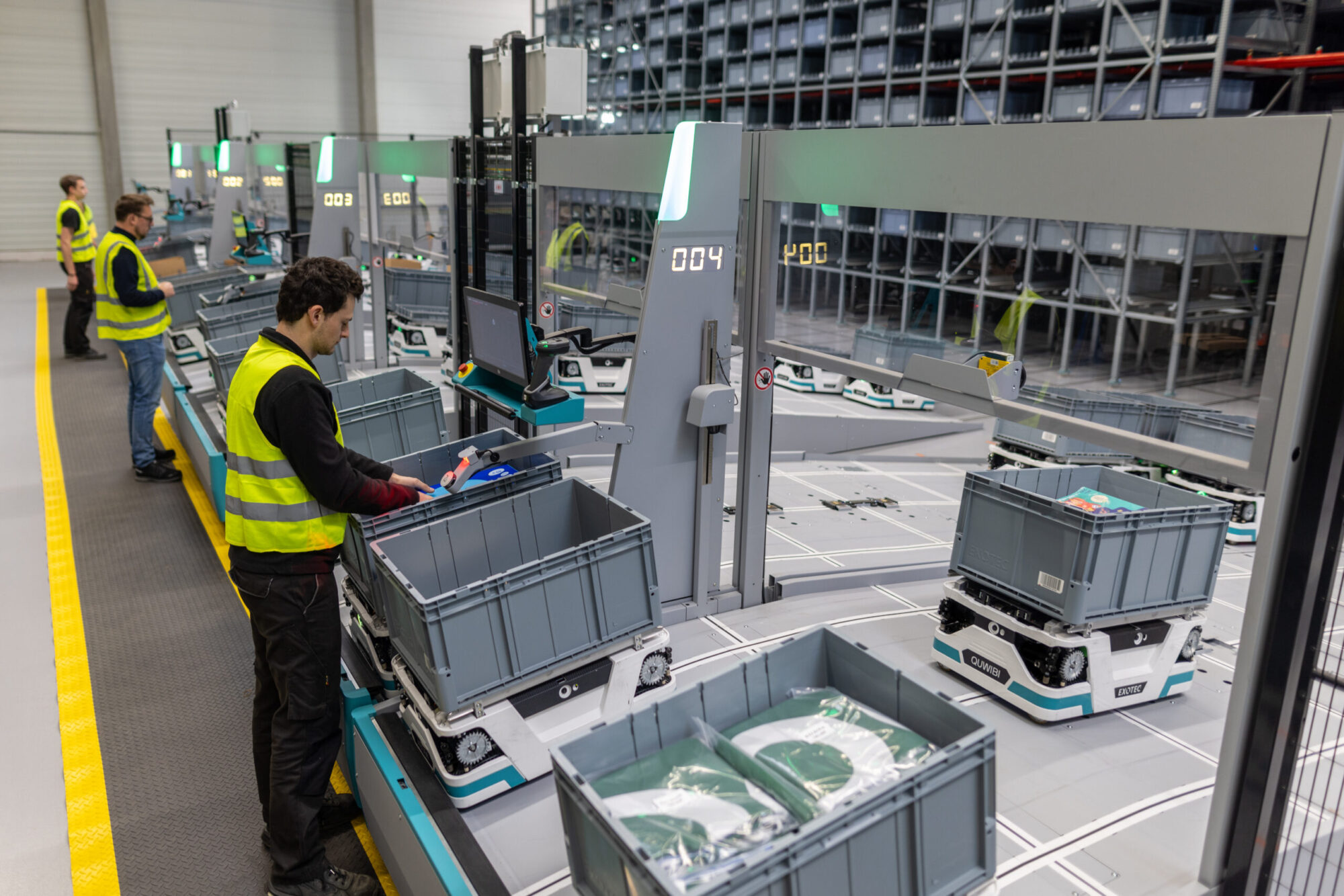
For operations processing high order volumes with many individual SKUs, industries like e-commerce, retail distribution, pharmaceutical fulfilment, GTP is usually where the ROI case gets made. Pick rates can rise three to five times versus manual operation. Error rates also fall because the system controls which items arrive and in what sequence they get picked.
GTP doesn't automatically mean fully automated. Many deployments use AMRs to bring shelving pods to a fixed pick station while a human does the actual picking. That's the most common entry point for warehouse automation buyers, and it doesn't require a full facility overhaul to get started.
How Does Goods-to-Person Work?
In an AMR-based Goods-to-Person system, the robots carry shelving units or storage pods across the warehouse floor. When an order arrives, the WMS (Warehouse Management System) assigns the relevant pods to the available robots. The AMRs arrive at pick stations with the product, where operators scan and pick, then the robot carries the pod back to its storage position.
SLAM technology handles navigation, the robots move without floor modifications or fixed infrastructure. Fleet management software keeps multiple robots from colliding or queuing at the same station simultaneously.
More complex GTP setups use ASRS, automated cranes or shuttle systems inside high-bay racking that retrieve specific totes or cartons and deliver them to an ergonomic pick station via a conveyor. The pick station matters here, well-designed stations present items at an ergonomic height, reduce repetitive reaching, and use light-directed or screen-directed guidance to tell the operator exactly what to take and where to put it, thereby reducing picking errors.
Where would you use Goods-to-Person technology?
- E-commerce fulfilment - where order volumes are high and each pick is a single item rather than a full case.
- Pharmaceutical distribution - uses it because accuracy is a regulatory requirement, not just a nice-to-have.
- Grocery fulfilment.
- Spare parts distribution.
- Retail replenishment.
Related Application Guides
![Warehouse AMR Guide: Autonomous Mobile Robots UK [2026]](https://automationworld.co/wp-content/uploads/warehouse-amr-300x225.jpg)
Warehouse AMR Guide: Autonomous Mobile Robots UK [2026]
UK warehouses are running out of people and running out of time. The transport and storage sector has recorded some of t…
View Guide
Warehouse Robotics UK: A Buyer’s Guide to Automation Systems
UK warehouse operators continue to face recruitment and retention challenges. Robots don't fix the people problem entire…
View Guide