












What is a cobot?
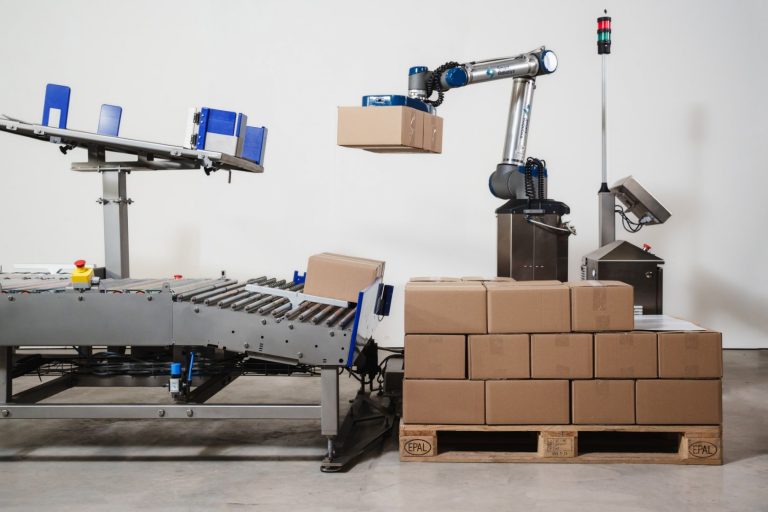
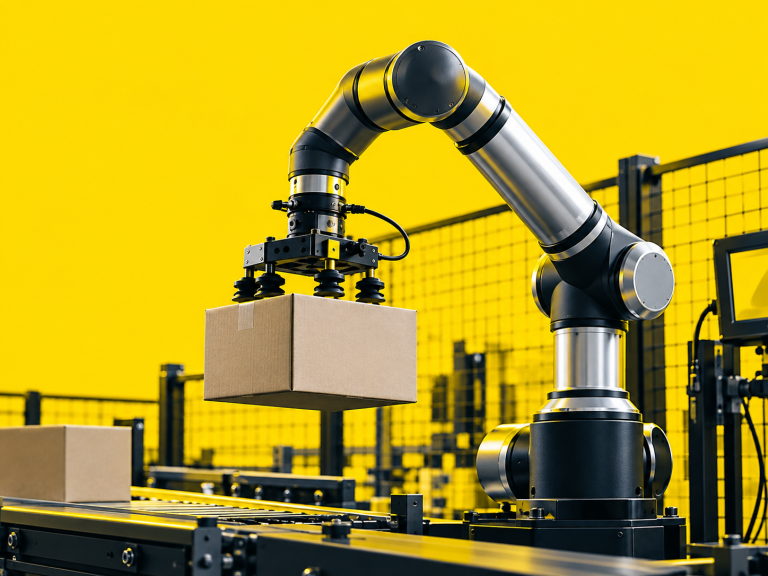
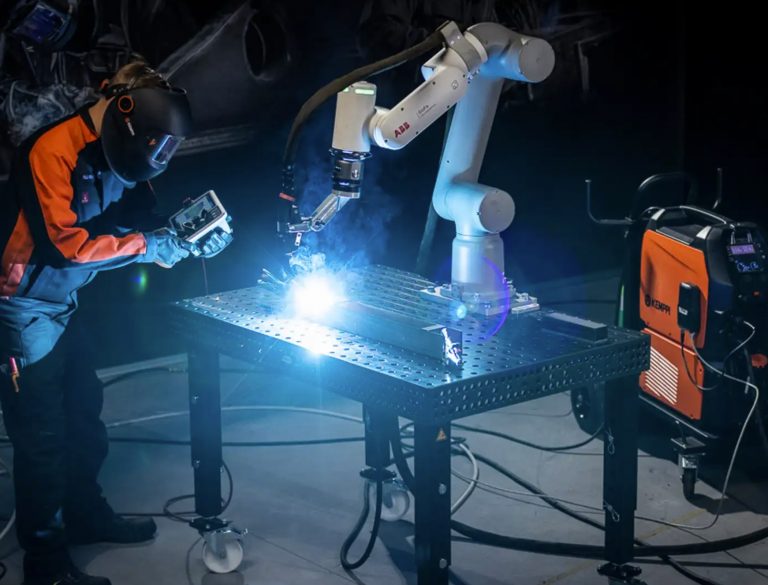
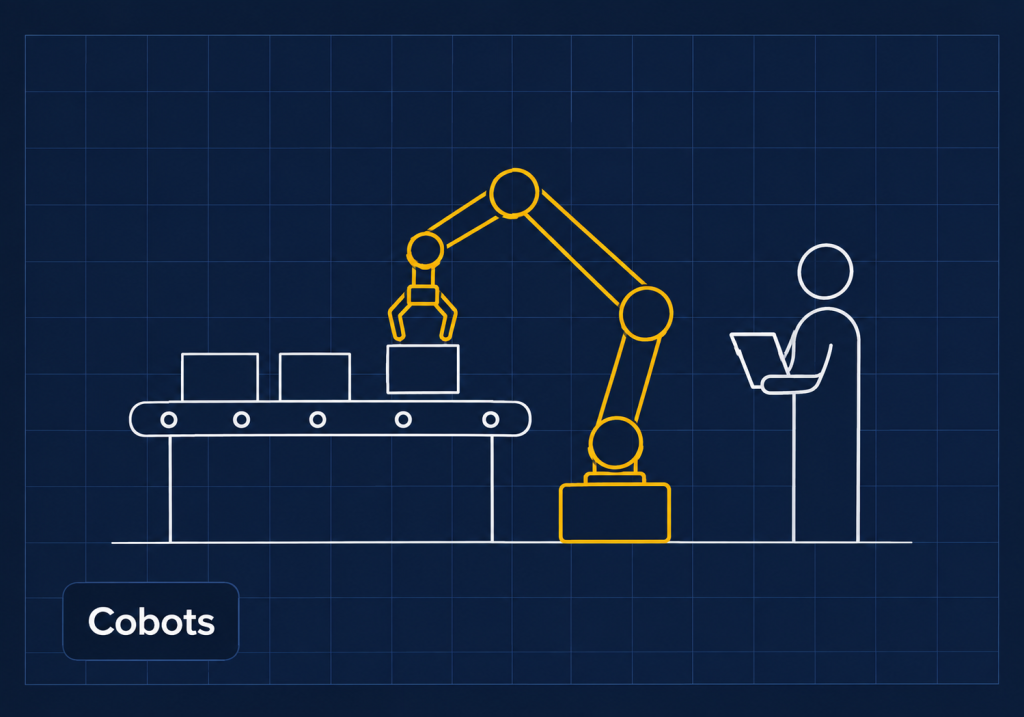
A collaborative robot is a robot arm designed for applications where people and robots may share a workspace. Its safety functions can limit force and speed or monitor the distance between people and the robot. With the right risk assessment, this can allow less guarding than a traditional industrial robot.
What makes cobots popular isn't only safety. They're light enough to move between jobs, and most can be taught by hand-guiding the arm or using a tablet. That means your own team can often make routine programme changes without relying on an integrator for every adjustment.
Cobot or industrial robot?
The most common question buyers ask. The answer usually comes down to speed, payload and how often the task changes.
| Cobot | Industrial Robot | |
|---|---|---|
| Speed | Can slow or stop when people enter the workspace; higher speeds may be possible. | Fastest cycle times, inside a protected cell |
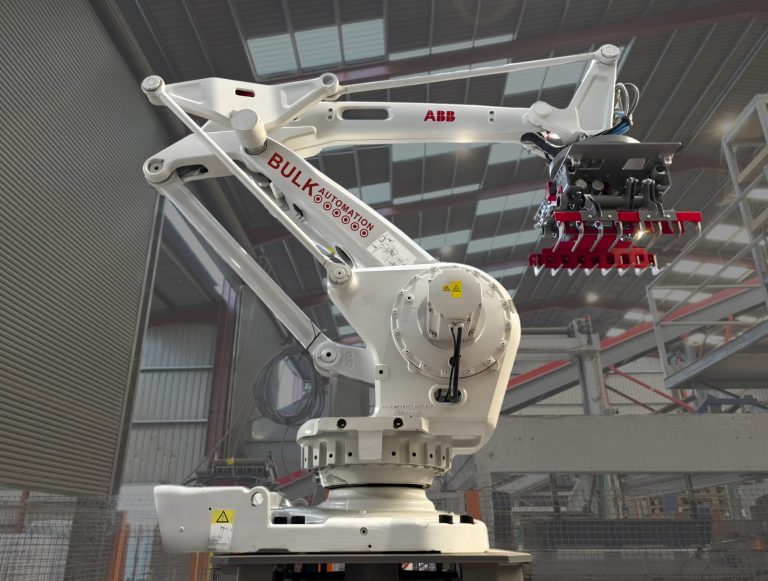
| Payload | Light to medium · up to 30 kg on some models. | Light to very heavy |
| Guarding | Often reduced, set by the risk assessment | Fencing or scanner-protected cell |
| Programming | Hand-guiding and tablet apps; in-house friendly | Usually specialist programming |
| Redeployment | Easy to move between tasks | Usually fixed in place |
Is a cobot right for your application?
A quick sense-check before you talk to suppliers. If most of your answers sit on the left, a cobot is worth a serious look.
Good fit
- Light to medium parts and tools
- Moderate cycle times
- Frequent changeovers or small batches
- Limited floor space
- You want your own team to reprogram it
- People need to work nearby
Think twice
- Very high line speeds
- Heavy payloads or long reach
- Sharp, hot or hazardous parts or tools
- Harsh, wet or washdown environments
- Very high-volume, fixed tasks where maximum cycle speed matters
- No people need to work near the cell
Cobot myths, and the reality
-
Myth Cobots never need guarding
Reality The application is collaborative, not the robot. The tool, the part and the task all feed into the risk assessment.
-
Myth A cobot is plug and play
Reality The arm sets up quickly. Grippers, fixturing and how parts reach the robot still take engineering.
-
Myth Cobots are only for small firms
Reality Large manufacturers use them too, especially for flexible tasks and lines with frequent changeovers.
-
Myth Cobots are always slow
Reality With scanners, many run at higher speed when no one is near and slow down only when a person approaches.
Free planning tools
Check a cobot can do the job before you buy
Choosing a cobot integrator
The arm is the easy part. What you're really buying is the gripper, the way parts are presented, the safety case and the training.
| What to check | Evidence to ask for |
|---|---|
| Collaborative safety know-howRisk assessment for shared spaces | An example risk assessment and who signs off the safety case |
| Gripper and part presentationWhere most projects succeed or fail | A trial with your actual parts, and a proposed fixturing layout |
| Brand experienceWhich cobot brands they regularly work with | Relevant certifications, partnerships and examples of completed projects |
| Proven cycle timeCan it hit your rate with people nearby? | A simulated or demonstrated cycle time for your task |
| Training for your teamSo you can change tasks yourself | A written training plan with named courses and hours |
| AftercareSupport once you are live | Remote support terms, response times and spares availability |
Before you ask for quotes
Integrators can tell you quickly whether a cobot will work if you bring these five things.
Use it in the Project Matcher- Part weights, dimensions and materials
- The cycle time or rate you need to hit
- How parts arrive and leave: trays, conveyor, machine
- Batch sizes and how often the task changes
- Who will program and look after it day to day
What does a cobot cost?
The arm is only part of the bill. Budget for the complete cell, not the list price of the robot.
-
Arm only
£20k–£60k
Cobot arm and controller, no tooling or integration
-
Typical cell
£40k–£90k
Arm, gripper, fixturing, safety and commissioning
-
Advanced
£100k+
Vision, multiple stations or cobot on a mobile robot
What moves the price:
- Gripper / EOAT
- Part presentation
- Vision
- Safety scanners
- Training
- Machine interfacing
Indicative UK costs, excluding VAT. Actual project costs vary by application and specification.
Frequently asked questions
It depends on the whole application, not just the robot. A cobot carrying a sharp blade or a heavy part may still need guarding. Every installation needs a risk assessment, which decides whether you need fencing, area scanners or nothing extra.
Cobot payloads range from a few kilograms to 30kg or more, depending on the model. Remember the gripper counts towards the payload, so check the combined weight of tool and part.
Usually, yes. Many cobots can be taught by hand-guiding the arm or through a tablet interface. Ask your integrator to include training so your team can change tasks without calling them out.
When people are nearby, a cobot limits its speed and force, so it is slower. Many cells use scanners so the cobot runs faster when the area is clear and slows as someone approaches.
A straightforward cell typically takes 8-12 weeks from order to production. Custom tooling, vision, machine interfacing and site requirements can extend the timeline.
Yes, that is one of their strengths. Mounting the cobot on a trolley or mobile base with repeatable docking points lets you move it between jobs as demand changes.