






What do PLC and process control integrators do?
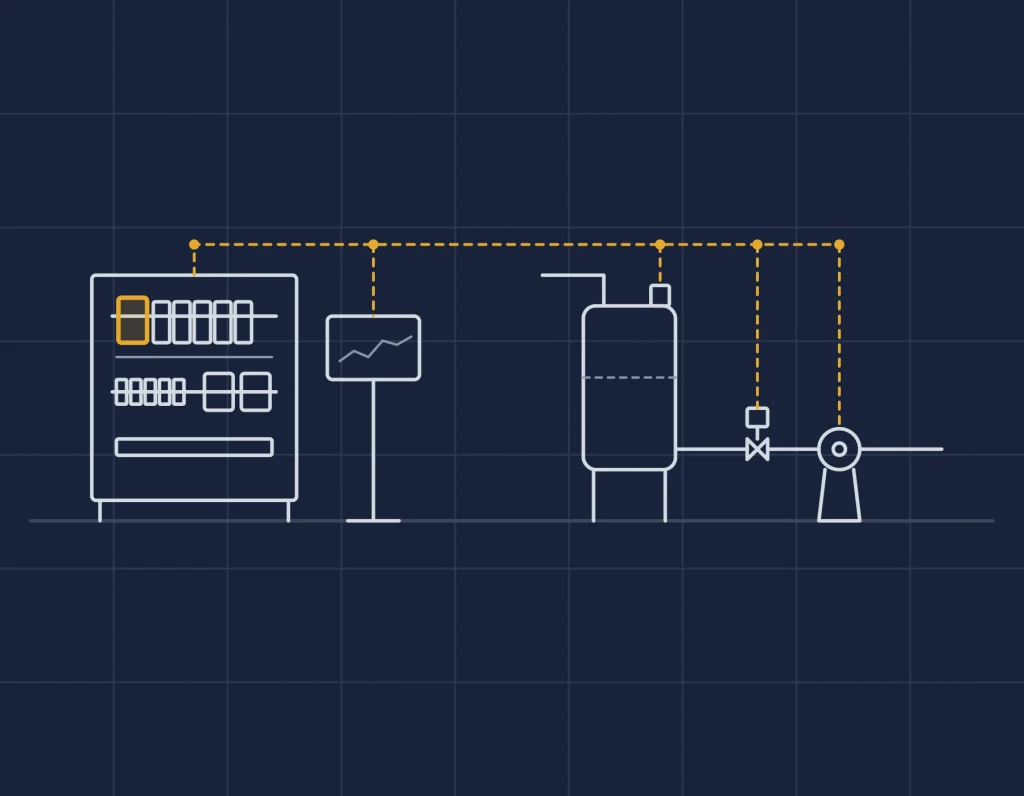
Programmable logic controllers (PLCs) control the sequence and operation of industrial machines and processes. They receive signals from sensors and other devices, run programmed logic, and control equipment such as motors, valves, actuators, drives and safety-related interfaces where appropriately designed.
A PLC and process-control integrator designs, programs, upgrades or connects these systems so equipment operates reliably and as intended. The work may involve a new machine, a production-line modification, replacing obsolete controls or connecting existing equipment to monitoring and supervisory systems.
A typical project may include:
- PLC programming: developing or modifying the logic that controls a machine or process.
- HMI: providing operator screens for control, status, alarms and adjustments.
- Control panels: specifying or modifying electrical panels, components and wiring.
- SCADA: monitoring and supervising equipment or processes across machines, lines or sites.
- Drives and instrumentation: integrating motors, variable-speed drives, sensors, meters and process instruments.
- System integration: exchanging signals or data between machines, robots, inspection equipment and higher-level systems.
The right scope depends on the problem you need to solve. A small PLC replacement is very different from a plant-wide SCADA project or a process-control system involving many instruments and interdependent operations.
When comparing suppliers, establish whether you need programming only, a complete hardware and software package, or a turnkey project covering design, installation, commissioning, documentation and ongoing support. If you are upgrading an existing system, the condition of the wiring, drawings, PLC programme and machine interfaces can have a major effect on cost and risk.
Which type of PLC and control system project do you need?
Start with the outcome you need. A targeted control upgrade, a new machine-control system and a SCADA integration project require different skills, hardware and levels of engineering. Define the scope before comparing quotations.
| Typical scope | Main consideration | |
|---|---|---|
| PLC retrofit or upgrade | Replace or modify controls on an existing machine | Compatibility, documentation and downtime |
| New machine or line controls | PLC, HMI, panel design and equipment interfaces | Defined functional requirements and commissioning |
| SCADA and production monitoring | Supervisory screens, alarms, trends and data collection | Tag count, reporting, networks and integration |
| Process-control integration | PLCs, instruments, drives, valves and process sequences | Process knowledge, reliability and control strategy |
| Legacy-system integration | Connect older equipment to newer controls or monitoring | Available signals, obsolete hardware and interface risks |
When should you use a PLC and control systems integrator?
External controls expertise can help when existing systems are unreliable, obsolete or difficult to integrate, or when a new machine or process needs a defined control strategy. First establish the operational problem and the changes needed to solve it.
Good fit
- Existing PLCs or HMIs are obsolete, unreliable or difficult to support.
- Machine changes require new sequences, signals or equipment interfaces.
- Operators lack useful alarms, process visibility or production data.
- Multiple machines need to exchange signals or coordinate their operation.
- You need documented, maintainable control software and a clear support plan.
- A new machine or process needs controls designed around defined requirements.
Think twice
- The fault has not been diagnosed and the cause is still unclear.
- Existing drawings, programmes or backups are missing and recovery is unplanned.
- The proposed change has no defined scope, acceptance criteria or budget.
- Production cannot accommodate the required survey, testing or shutdown.
- Safety-critical changes are proposed without competent assessment and validation
Free planning tools
Size your project before you speak to suppliers
What to check before choosing a control systems integrator
Ask suppliers to explain how they will assess your existing controls, define the solution, test it and hand it over. Compare the engineering scope and evidence behind each proposal, not just the hardware brand or headline price.
| What to check | Evidence to ask for |
|---|---|
| Relevant application experienceHave they delivered similar machines, processes or control upgrades? | Comparable projects, references and examples of similar equipment. |
| PLC and HMI expertiseCan they support your current platform or explain the case for changing it? | Named platforms, relevant engineering experience and a migration plan if needed. |
| Scope and specificationAre functions, interfaces, exclusions and acceptance criteria clearly defined? | Functional specification, I/O list, interface list and documented assumptions. |
| Existing-system surveyHave they checked wiring, drawings, programmes and hardware condition? | Survey report, backup strategy, obsolescence list and identified risks. |
| Downtime and commissioningHow will the change be installed, tested and brought into service? | Test plan, shutdown plan, commissioning sequence and recovery arrangements. |
| Safety and complianceHow will control changes affect machine safety and existing risk assessments? | Defined responsibilities, risk assessment and validation evidence where required. |
| Data and cybersecurityHow will the system connect securely to networks or other software? | Network architecture, access controls, backup policy and supported protocols. |
| Handover and supportWhat documentation, training and post-installation help are included? | As-built drawings, commented code, backups, training and support terms. |
Prepare for a PLC or control systems quotation
You do not need a complete control-system specification to approach an integrator. Sharing the existing equipment, problems, required changes and production constraints will help suppliers assess the scope and identify unknowns early.
Use it in the Project Matcher- List the machines, processes and equipment involved, including makes, models and control platforms.
- Describe the problem to solve, such as faults, obsolete controls, poor visibility or a planned process change.
- Gather available PLC programmes, HMI files, electrical drawings, I/O lists and equipment manuals.
- List required functions, operator screens, alarms, reports and interfaces with other machines or systems.
- Record production hours, process constraints, downtime windows and any shutdown restrictions.
- Identify network, data, safety, validation and site-access requirements relevant to the project.
- Set your target outcomes, indicative budget, preferred timescale and commissioning requirements.
What affects PLC and control system costs?
The cost of a PLC or process control project depends on the existing equipment, the changes required and the level of integration involved. Establishing the scope early helps you compare quotations and avoid unexpected engineering, installation or commissioning costs.
-
Targeted upgrade
Scope dependent
PLC or HMI changes on an existing machine, where hardware and interfaces remain suitable.
-
New machine or line controls
Scope dependent
New control panels, programming, equipment interfaces, installation and commissioning.
-
SCADA and wider integration
Scope dependent
Supervisory monitoring, multiple machines, data integration or plant-wide control changes.
What moves the price:
- PLC and I/O hardware
- Control panel work
- Programming and engineering
- HMI and SCADA
- Equipment interfaces
- Production downtime
- Documentation and training
Indicative UK costs, excluding VAT. Actual project costs vary by application and specification.
Frequently asked questions
A PLC and process control integrator designs, programs, upgrades and connects industrial control systems. Work can include PLC logic, HMI screens, electrical control panels, instrumentation, drives, SCADA and communication between machines. The scope may cover programming alone or a complete design, installation, commissioning and handover package.
A contained single-machine PLC retrofit or upgrade may have an indicative budget of £8,000–£25,000, but this is not a universal turnkey price. Hardware, panel modifications, installation, commissioning and legacy-system issues can increase the total. Ask suppliers to specify what is included and excluded.
A PLC runs control logic and operates connected equipment. An HMI gives operators a screen to monitor and interact with a machine or process. SCADA provides supervisory monitoring and control across equipment or processes, often with alarms, trends and historical data. They can work together as parts of one control system.
It depends on hardware condition, availability of spares, software support, system performance and the changes required. A targeted upgrade may be suitable where the existing architecture remains fit for purpose. Broader replacement may be appropriate where components are obsolete, documentation is poor or the system cannot meet new requirements. A controls survey should establish the options and risks.
Many integrators support several industrial control platforms, but expertise varies. Tell suppliers which PLC, HMI, drive and network technologies you use, including model numbers where possible. Ask them to confirm their relevant experience and whether any proposed change would require software migration, replacement hardware or additional downtime.
Yes, where the equipment, software and network architecture support the required interfaces. The design may use industrial protocols, gateways or other integration methods. Define which data needs to be exchanged, how frequently it is needed, and who is responsible for network access, cybersecurity, testing and ongoing support.
Share the problem you need to solve, equipment details, available PLC programmes and drawings, required functions, interfaces, production constraints and preferred downtime window. You can start without a complete specification, but suppliers should identify assumptions and missing information before providing a firm price.